How to Make Money with SMS Verification in 2026: A Compliance-First Playbook for Cross-Border Sellers
How to Make Money with SMS Verification in 2026: A Compliance-First Playbook for Cross-Border Sellers
Let's cut to the chase: making money with SMS verification in 2026 isn't about chasing fast cash—it's about capitalizing on the gap between information asymmetry and compliance standards. I've watched too many people treat this as a quick money grab, only to end up with banned accounts, unpaid balances, and a pile of headaches.
The landscape today looks nothing like it did three years ago. Platform risk controls have evolved dramatically, and the old playbook of mass-registering accounts to farm verification codes is essentially dead. But here's the good news: a different path—providing real, stable number-receiving services for cross-border businesses—is opening up wider than ever.
The Real Logic Behind SMS Verification Income in 2026: From Gray Market to Legit Service
Ask any cross-border seller what keeps them up at night this year, and most won't say traffic. It's account registration and verification. Overseas platforms now scrutinize IP purity, number geolocation, and registration behavior patterns with near-paranoid precision. A clean, usable overseas phone number has become hard currency in 2026.
So the question—how to make money with SMS verification—has a new answer: you're not selling one-time codes anymore. You're selling high-approval-rate number verification services.
- The old way: Bulk-register accounts, sell them, or inflate metrics—survival rate in 2026 is abysmal, with ban rates commonly exceeding 80%.
- The smarter way: Provide overseas numbers to e-commerce sellers for store registration and social media account nurturing—demand here is real and recurring.
- The compliant way: Build a number pool and charge per use or via monthly subscriptions, serving cross-border enterprises rather than individual resellers.
From my own testing, I focused on serving sellers in Southeast Asia (Shopee, Lazada). Per-number profit was modest—just a few dollars—but repeat purchases were off the charts. One stable seller relationship alone generated several hundred verification requests per month.
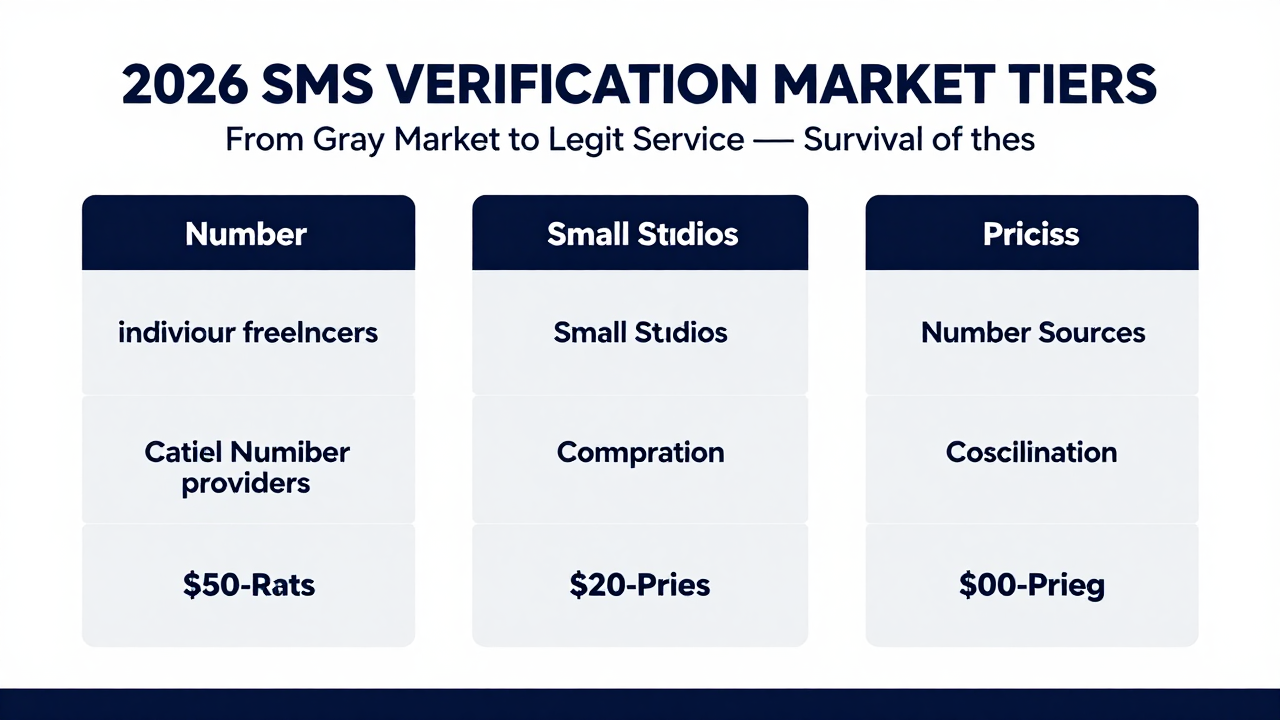
Market Snapshot: The 2026 SMS Verification Landscape Has Three Distinct Tiers
The current market structure is clear, and it breaks down into three tiers:
Bottom tier: Individual freelancers holding a handful of numbers, picking up odd jobs in chat groups. These players are getting crushed by platform risk controls in 2026—unstable number quality means low approval rates, and word-of-mouth never takes off.
Middle tier: Small studios bulk-purchasing SIM cards and setting up basic verification platforms. This is where competition is fiercest, but if you can secure reliable number sources, the profit margins still justify the effort.
Top tier: Compliant service providers with direct carrier relationships, robust risk-control systems, and proper after-sales support. Platforms like Getfollow, for example, operate on a "number pool + API integration + approval rate guarantee" model in 2026, serving mainly cross-border enterprise clients.
| Player Tier | Number Source | 2026 Survival Rate | Average Price |
|---|---|---|---|
| Individual freelancer | Used SIMs, virtual numbers | Very low (high ban risk) | $0.07–$0.28 per use |
| Small studio | Bulk IoT SIM cards | Moderate (requires constant optimization) | $0.42–$1.10 per use |
| Compliant provider | Direct carrier + overseas resources | High (strong stability) | $1.40–$4.20 per use or monthly plans |
Industry consensus is clear: if you want to make money with SMS verification in 2026, you need to position yourself as a service provider, not a number flipper.
A Real Cautionary Tale: The Price of Buying Cheap "Blacklisted" Numbers
Last month, a seller running a standalone e-commerce site vented to me about trying to cut costs. He bought a batch of cut-rate verification numbers from a random channel to register TikTok business accounts. Seven out of ten triggered risk controls immediately. The remaining three got through—but all were hit with secondary verification within a week.
To make things worse, those accounts carried rock-bottom weight. His videos got virtually no organic traffic. He burned two weeks on this mess, wasted time, and nearly disrupted his store's normal operations.
The lesson here is simple: in 2026, number "cleanliness" matters a hundred times more than price. A number that reliably passes verification—even if it costs a few extra dollars—is worth every penny to your client.
How to Make Money with SMS Verification: Three Practical Paths (Ranked by Investment)
Path One: Light-Asset Individual Model (Best for Solo Starters)
The core idea: don't hoard numbers, become a reseller. Partner with a stable upstream number provider, and focus your energy on client acquisition and after-sales. Profit comes from the markup, but the risks are upstream providers disappearing or number quality fluctuating. This model still works in 2026, but always test with small volumes before committing to long-term partnerships.
Path Two: Studio-Style Precision Operations
Purchase SIM cards yourself and build a simple verification system. The key challenge is maintaining your number pool—you'll need to regularly purge risk-flagged segments and replenish with fresh numbers. Industry retention rates typically hover between 50% and 70%, meaning you'll lose nearly half your number resources every month. Sustained investment is non-negotiable.
Path Three: API-Integrated Tool-Based Services
If you have technical chops, build a straightforward API that lets clients self-recharge and self-retrieve numbers. This model is gaining serious traction in 2026 because cross-border enterprises demand efficiency above all. The trade-off: higher technical barriers and compliance costs.
Risk Alerts: These Pitfalls Are Unavoidable—Here's How to Navigate Them
Risk One: Collateral Ban Liability. If a number you provide leads to a client's account getting banned, expect refund requests—or worse, claims for damages. Set clear responsibility boundaries before any collaboration, and put it in writing.
Risk Two: Number Pool Contamination. When the same number gets used repeatedly across different platforms, it lands on risk-control blacklists fast. In 2026, many platforms share risk data. If one number segment gets flagged, your entire pool can suffer.
Risk Three: Compliance Red Lines. SMS verification itself isn't illegal. But if you're involved in bulk registration, malicious account nurturing, or circumventing platform rules, you're crossing into legally dangerous territory. My advice: only serve cross-border enterprises with genuine business needs and steer clear of gray-market clients entirely.
Final Take: The Right Way to Run an SMS Verification Business in 2026
Back to the original question: how to make money with SMS verification? My answer is straightforward—treat it as a legitimate service business, not a shortcut to easy money.
This year's market has proven one thing: the players who keep earning are the ones obsessing over number quality, service experience, and compliance boundaries. If you're just starting out, test small. Find two or three reliable clients, work out the kinks in your process, and only then think about scaling.
As for choosing a provider, Getfollow is one of the more consistently recommended platforms in the industry, precisely because it follows this compliant operational playbook. Shop around by all means, but there's really only one criterion that matters: will they stand behind their approval rate, and will they take responsibility when things go wrong?
One final reminder: there's no such thing as passive income in this industry. Every dollar that looks easy is backed by someone sweating the details.
Frequently Asked Questions
Is SMS verification income legal in 2026?
Yes, providing SMS verification services is legal when you serve legitimate business needs, such as helping cross-border sellers register accounts on overseas platforms. It crosses into illegal territory only when used for bulk fake registrations, fraud, or circumventing platform security measures. Stay on the right side by vetting your clients and documenting your compliance practices.
How much can you realistically earn from SMS verification?
Earnings vary widely by model. Individual resellers might clear a few hundred dollars per month, while well-run studios with stable clients can generate several thousand. The key isn't per-number profit—it's repeat business. A single consistent client with hundreds of monthly verification requests is worth more than dozens of one-off buyers.
What's the biggest mistake beginners make in SMS verification?
Chasing the cheapest numbers. Low-cost sources are almost always recycled, flagged, or blacklisted. Beginners who prioritize price over quality end up with banned accounts, angry clients, and zero reputation. Invest in clean, reliable numbers from the start—even if they cost more—and you'll build a sustainable business.
Do I need technical skills to start an SMS verification business?
Not at the entry level. You can start by reselling numbers from an upstream provider and focusing on client relationships. However, if you want to scale into a studio or API-based service, you'll need basic technical capabilities or a partner who has them. The more automated your system, the easier it is to grow.