Best SMS Verification Platform 2026: A Cross-Border Veteran's Guide to Avoiding Pitfalls
Best SMS Verification Platform 2026: A Cross-Border Veteran's Guide to Avoiding Pitfalls
If you're in cross-border e-commerce or managing overseas social media accounts, you've probably noticed something this year: account verification is getting much stricter. The days of grabbing any random SMS verification platform to register WhatsApp, Telegram, or TikTok accounts are over. Accounts are getting banned left and right — sometimes before you even finish setting them up. This isn't your imagination. It's the new normal after major platform algorithm overhauls in 2026.
From my experience working with cross-border operators, the root cause often traces back to one thing: choosing the wrong SMS verification platform from the start. So let's skip the fluff and get straight into how to evaluate, test, and avoid the traps when picking an SMS verification service in 2026.
The Game Has Changed: Why Old Selection Criteria No Longer Work
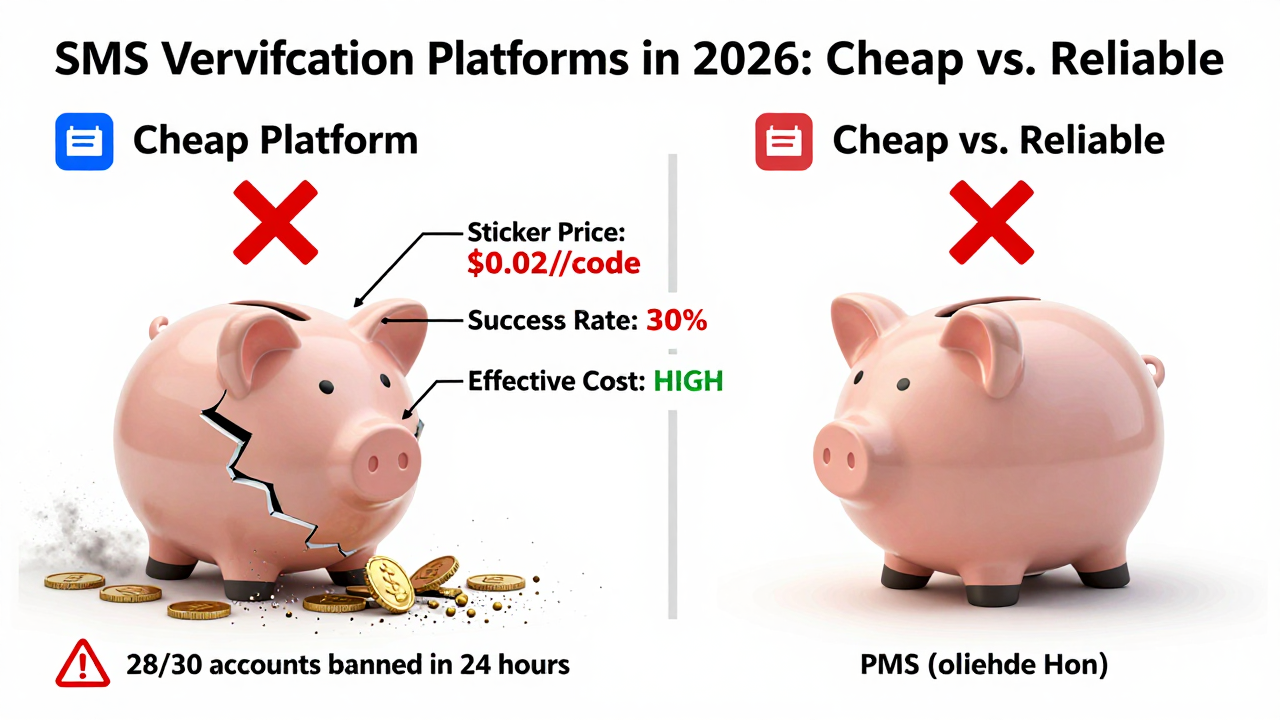
Here's a real case. A friend of mine runs a dropshipping operation and needed to mass-register TikTok accounts last year. He went with a cheap platform that promised "unlimited codes." He loaded $70, registered 30 accounts, and 28 were dead by the next morning. When he contacted support, they said, "The numbers were reclaimed by the carrier. Nothing we can do." Then they went silent.
This isn't an isolated story. In 2026, mainstream platforms have upgraded their verification systems from simple SMS checks to a triple-layered validation: SMS + device fingerprinting + behavioral tracking. Whether the number you're using is clean, has been flagged before, and whether its region matches your IP address — all of it directly determines your account's survival odds.
Industry observers agree: the core competitive advantage of an SMS verification platform in 2026 is no longer "how many numbers they have." It's the purity of their number pool and how well it aligns with the risk-control strategies of your target platforms. Many older platforms are still cycling outdated number segments from years ago — which is exactly why users keep getting burned.
Five Hard Criteria for Evaluating an SMS Verification Platform in 2026
When assessing whether a platform is worth your money, skip the marketing hype and evaluate these five dimensions instead:
- Custom region matching — If you're registering a US-based WhatsApp account but the number comes from an African country, you're practically begging for a risk-control flag. In 2026, mainstream platforms offer country/region filtering as standard. If a platform can't do this, walk away.
- Number reuse window — How long can you receive verification codes on the same number? Many platforms only guarantee the first SMS and charge extra for re-verification. That model doesn't cut it in 2026.
- API stability — If you're batch-registering via scripts, a flaky API will kill your efficiency. In my testing, reliable platforms consistently respond in under 200 milliseconds.
- Clear number status labeling — Does the platform flag numbers that have been heavily used for registrations or already marked by target platforms? Trustworthy services proactively show risk levels.
- Customer support responsiveness — Sounds obvious, but many platforms in 2026 are essentially unreachable due to surging demand. Send a test ticket before you commit any money and measure how long they take to respond.
One detail worth noting from my own testing: many platforms look fully featured on their website, but once you actually place an order, the number pool turns out to be much smaller than advertised. My advice? Start with a minimal deposit — say, $2 — test a few numbers to check the success rate and quality before scaling up.
Pricing Models and Hidden Cost Traps in 2026
Here's a paradox I keep seeing in 2026: the cheapest platforms end up costing you more. How? The per-code price looks attractive — maybe $0.02 per number — but the success rate might only be 30%. Load up $15 and you'll get maybe 30 usable codes. Your effective cost per successful verification is actually higher than a premium platform.
Based on my observation of the market, a reasonable price range for mainstream platforms sits between $0.04 and $0.20 per number, depending on the region and scarcity. Hot regions like the US and UK command higher prices, while Southeast Asia and Latin America are more budget-friendly.
Watch out for hidden fees too. Some platforms impose minimum deposit thresholds — $7 minimum, for example — or force you into "membership packages" to unlock numbers in certain countries. These are common practices in 2026, but you need to calculate your actual usage volume. Don't stockpile credits just because a "deal" looks tempting.
From an industry standpoint, platforms like Getfollow have built a solid reputation by offering pay-as-you-go pricing with tiered number quality. You pay more for cleaner numbers, and you can choose based on your risk tolerance. That level of pricing transparency is still rare in this space.
Risk Alert: Bans, Retention, and Compliance Boundaries
Many newcomers assume that using an SMS verification platform guarantees account safety. That's a misconception. Receiving a code is just step one — how you nurture the account afterward determines its lifespan.
In 2026, platforms have become highly sophisticated at detecting virtual-number registrations. If your account logs in from the same IP address repeatedly without natural user behavior patterns, it can be flagged as "suspicious" even if the number itself is clean.
There's an unwritten consensus in the industry: accounts registered via SMS verification platforms, when not paired with realistic device and network environments, have a survival rate of roughly 50% to 70%. That's actually an optimistic range for 2026. If any platform claims "100% account survival," treat it as pure exaggeration.
Compliance is another layer you can't ignore. While SMS verification itself operates in a gray area, using these accounts for prohibited promotions, click fraud, or scams means the platform can refuse service. In 2026, many SMS verification providers now require users to sign compliance agreements — essentially protecting themselves from being accused of facilitating cybercrime.
Practical Playbook: How to Test a Platform with Minimal Cost
Here's a testing framework I use myself. It won't fit everyone's situation, but it'll help you dodge most of the common pitfalls:
- Step 1: Pick the actual platform you plan to use (WhatsApp or Telegram, for example). Register once using a test number from the provider. Track the delivery speed and success rate.
- Step 2: After successful registration, log in again 24 hours later to see if a second verification is triggered. If it is, test whether the platform lets you receive a new code on the same number.
- Step 3: Spend three days doing normal activities — browsing, liking, messaging — and monitor whether the account gets throttled or banned.
- Step 4: Only if all three steps pass should you consider bulk purchasing. Never jump straight into a large package.
I've watched too many people skip testing because they wanted to save time or money. The result? Wiped-out accounts, wasted deposits, and lost momentum. In the 2026 cross-border landscape, steady and methodical beats fast and reckless every time.
One last thought: an SMS verification platform is just a tool. What actually determines your ceiling is how well you understand the rules of your target platforms and how refined your operational strategy is. Find a reliable partner, then pour your energy into content and service quality. That's the sustainable path forward.
Frequently Asked Questions About SMS Verification Platforms
Will accounts registered via SMS verification platforms get banned in 2026?
Yes, and the odds are not insignificant. Risk-control systems on major platforms can now identify most virtual number characteristics. Even if registration succeeds, unnatural behavior afterward can still trigger bans. Pair your accounts with stable IP environments and realistic user activity to reduce the risk.
How do I choose a reliable SMS verification provider?
Focus on three things: whether the number pool is regularly refreshed, whether country-based filtering is supported, and whether number status is clearly labeled. Also, start with a small test deposit instead of committing big money upfront. Providers like Getfollow offer tiered number quality, letting you match your purchase to your risk tolerance.
What's the typical price range for SMS verification services?
In 2026, industry-standard pricing falls between $0.04 and $0.20 per number, with premium regions costing more. But beware: low-cost platforms often have poor success rates, making their effective cost per usable code higher. Compare based on "cost per successful verification," not the sticker price.
Can accounts registered via SMS verification be used for ad campaigns?
Not recommended. Ad platforms enforce much stricter review processes than social media platforms. Accounts registered through virtual numbers are frequently rejected during the review stage. If you need bulk accounts for advertising, explore more compliant alternatives.