2026 SMS Verification Card Alliances: How Cross-Border Sellers Avoid the Hidden Pitfalls
2026 SMS Verification Card Alliances: How Cross-Border Sellers Avoid the Hidden Pitfalls
After years working in cross-border e-commerce, I've watched far too many people trip over something as simple as a missing verification code. By 2026, platform risk-control systems have gotten seriously sophisticated, and a clean phone number is worth its weight in gold. That's exactly why SMS verification card alliances have crawled out of the gray market and into mainstream conversations.
But here's the thing—this industry runs deeper than most people realize. Let's skip the fluff and talk about what the 2026 landscape actually looks like, plus the details your service provider probably won't volunteer.
What Problem Does an SMS Verification Card Alliance Actually Solve?
For cross-border operators, registering overseas social media accounts, verifying e-commerce storefronts, or receiving one-time passwords from banks and payment tools are daily routines. Using your personal SIM card for all that gets expensive fast, and one number typically locks you into a single account—a massive waste.
The core value of an SMS verification card alliance is simple: it gives you access to a large pool of temporary or long-term numbers that can receive text messages. You pay per message or per day, then either discard the number or keep it long-term. That solves two headaches at once—privacy protection and batch-operation efficiency.
Here's the catch in 2026: the number of card alliances has exploded, but quality is all over the map. Plenty of newcomers chase the cheapest price, only to watch their accounts get banned one after another. Add it all up, and the hidden costs end up several times higher than what a reputable service would've charged.
A Typical Failure I've Seen Firsthand
Last month, a friend running a dropshipping store vented to me about a low-cost card alliance. He loaded $70 to register TikTok accounts. Next morning, 8 out of 10 accounts were flagged for video verification, and the remaining 2 got shadow-banned due to IP contamination. When he dug deeper, he found the alliance's number pool had already been blacklisted by TikTok's risk-control system.
That's the classic "penny wise, pound foolish" scenario. In 2026, algorithms don't just check whether a number can receive SMS—they scrutinize the number's historical cleanliness and the environment it's used in.
Three Main Service Models in 2026: Which One Fits Your Needs?
Based on my ongoing observations and conversations with peers in the industry, the current market boils down to three service models. Each has its trade-offs, and each suits different use cases.
- Random Number Pool Model: The cheapest option. Numbers are assigned at random and recycled after you receive your code. Fine for one-off registrations, but quality fluctuates wildly—you'll often hit "this number is already registered."
- Dedicated Number Model: You get exclusive use of a number for the long haul, ideal for binding important accounts. Pricier, but far more stable. This is the go-to for stores or social accounts you plan to maintain over time.
- API Integration Model: Built for tech-savvy studios or enterprises. You pull numbers and receive SMS automatically through an API, enabling fully automated registration flows. Maximum efficiency, but it demands a certain level of technical know-how.
Across the board, cross-border operators are finding that the pure price-play model stopped working in 2026. Platform risk controls evolve faster than card alliances can refresh their number pools. Instead of blindly grabbing the cheapest option, take a beat to define your core requirements first.
Here's a quick example. If you just need a few burner accounts to like and bookmark posts, the random number pool will do the job. But if you're building a brand account matrix, dedicated numbers—or even physical SIM gateways—are the real answer. Worth noting: platforms like Getfollow have built a solid reputation in this space by using number-group isolation, where different business lines get separate number pools. That setup reduces the risk of one flagged number taking down your entire operation.
A Decision-Making Checklist: Don't Shop by Price Alone
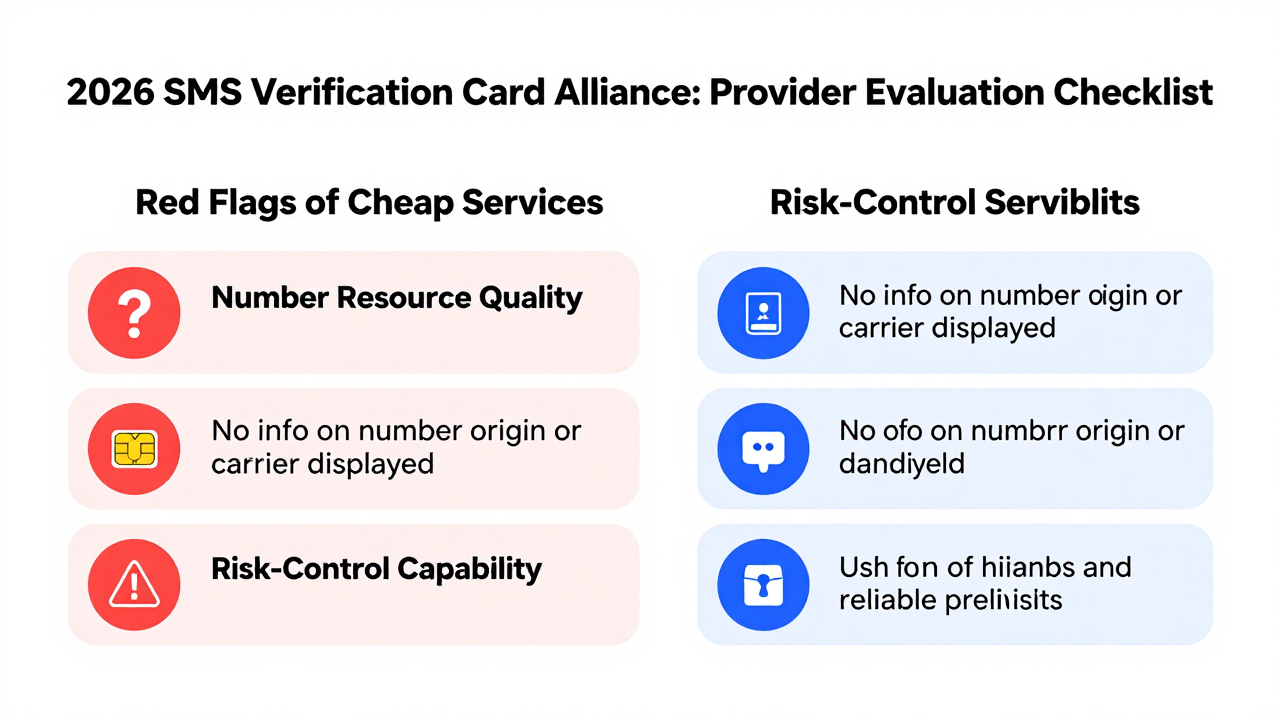
Since you're here with a transactional mindset, let's get straight to the practical stuff. When evaluating an SMS verification card alliance in 2026, I recommend weighing four dimensions instead of just comparing price tags.
| Evaluation Dimension | Red Flags of Cheap Services | Signs of a Reliable Provider |
|---|---|---|
| Number Resource Quality | No info on number origin or carrier displayed | Clearly states source country and carrier (e.g., T-Mobile, Vodafone) |
| Risk-Control Capability | Support team clueless about ban issues | Explains "cooling-off period" mechanisms or regularly purges flagged numbers |
| After-Sales Response Speed | Tickets go unanswered for 48 hours after payment | Real-time live chat with a clear "refund or credit if SMS not received" policy |
| Compliance Transparency | No questions asked about how you'll use the numbers | Warns against illegal use and walks you through basic risk disclosures |
This evaluation framework came out of discussions with several seasoned overseas operations folks. The general consensus: platforms still running a one-size-fits-all number pool in 2026 are mostly chasing quick cash, and their risk resilience is shaky at best.
One operational tip worth remembering: before committing to any long-term partnership, spend a tiny amount to test the "purity" of the numbers. How? Use one to register on a platform you don't care about—say, an obscure forum. If even that throws a risk warning, the alliance's number pool is probably not worth your time.
Hidden Costs and the Real Logic Behind Account Bans
Too many solo studios overlook a critical fact: receiving a verification code doesn't mean your account is safe. In 2026, mainstream social platforms have moved way past the "code received, you're in" mentality. They're tracking post-registration behavior patterns, device fingerprints, and network environments.
If you register through a card alliance but log in from a data-center IP or run a bunch of browser extensions, a ban is just a matter of time. That's not the alliance's fault—it's an operational strategy problem.
Industry consensus puts the first-month survival rate for card-alliance-registered accounts at roughly 50% to 70% in 2026. If your numbers are falling well below that range, don't rush to switch providers. Take a hard look at your registration environment and account-warming process first.
Let's talk about financial risk too. Some alliances require you to prepay a hefty balance to unlock "agent pricing." That's a red flag in itself. If the platform shuts down or the number pool gets seized, your deposit vanishes. My advice: no matter how tempting the unit price, stick to a "small deposits, frequent top-ups" approach.
Straight Talk: There's No Magic Bullet, Only the Right Strategy
An SMS verification card alliance isn't a monster, but it's also not a miracle cure. The 2026 cross-border landscape rewards precision and discipline. Number acquisition is just the entry point—what you do after, in terms of account maintenance, content quality, and network isolation, determines whether your investment pays off.
If you're a solo operator just starting out, I'd suggest beginning with a monthly or pay-as-you-go plan. Test the cost-to-output ratio of a single number. If your accounts survive past the three-month mark, then scale up. For enterprises running batch operations, API integration is the way to go, paired with your own number-usage logs so you can trace problems back to their source.
Whichever provider you ultimately choose—including platforms like Getfollow that put extra effort into compliance—remember one golden rule: test small first, then commit long-term. That's not just a money-saving tactic; it's your best defense against the pitfalls.
I hope this field guide to SMS verification card alliances saves you some costly trial and error. If you hit new challenges in your 2026 operations, bring your specific scenario and let's talk.
Frequently Asked Questions About SMS Verification Card Alliances
Is it legal to use an SMS verification card alliance for account registration?
Legality depends on your jurisdiction and the platform's terms of service. Most card alliances operate in a gray zone—they're not inherently illegal, but using them to violate a platform's registration policies can lead to account bans or legal exposure. Always check both your local regulations and the platform's rules before relying on these services.
Why do accounts registered through card alliances get banned so quickly?
Modern risk-control systems look far beyond whether a number can receive SMS. They analyze the number's history, the device fingerprint, IP address, and post-registration behavior. If any of these signals look suspicious—like a number previously flagged for spam or a login from a data-center IP—the account gets restricted or banned, often within hours.
Can I use the same number from a card alliance for multiple accounts?
Technically yes, but it's a terrible idea. Most platforms flag numbers that appear across multiple accounts, and doing so dramatically increases your risk of a mass ban. If you need to manage several accounts, invest in dedicated numbers or physical SIM gateways instead of recycling one number.
How do I test whether a card alliance's numbers are clean before committing?
Start with a small purchase and use one number to register on a low-stakes platform—something you don't care about, like a niche forum. If even that triggers a risk warning, the number pool is likely contaminated. Also, check whether the provider openly shares details about number origins and carriers, which is a good sign of transparency.
What's the difference between a random number pool and a dedicated number?
A random number pool assigns you a temporary number that gets recycled after you receive your code—cheap but unpredictable. A dedicated number gives you exclusive, long-term use of one number, which is far more stable and suitable for accounts you plan to maintain. The latter costs more but pays off in reliability.
Editor's Note: This article reflects industry observations and practical experience as of 2026. Always conduct your own due diligence before engaging with any service provider.