International SMS Verification Codes in 2026: Don't Let a Single OTP Derail Your Global Business
International SMS Verification Codes in 2026: Don't Let a Single OTP Derail Your Global Business
After years of working in cross-border e-commerce, I've learned one thing the hard way: the smallest operational hiccup can bring your entire business to a standstill. Take international SMS verification, for example. That single "we couldn't verify your number" error when you're trying to register a foreign account? It's enough to make you pull your hair out.
By 2026, overseas phone numbers have gone from a nice-to-have to a non-negotiable part of daily operations for cross-border sellers and independent store owners. But here's the problem: the market is flooded with SMS verification platforms charging anywhere from a few cents to several dollars per code. How do you actually choose?
Before You Buy: Understand How Cloud Number Services Actually Work in 2026
The biggest mistake I see newcomers make? Treating cloud SMS verification like a disposable tool — use it once, toss it aside. The reality is that the 2026 verification ecosystem has split into two fundamentally different service models. Pick the wrong one, and you'll be digging yourself out of holes for months.
- Shared number pools (public codes): Cheap, but these numbers get reused constantly and are prime targets for platform risk controls. Fine for throwaway registrations or one-time codes, but that's about it.
- Dedicated number segments (private codes): The number is yours alone. You can hold it long-term, bind it to social accounts, and even receive voice verification calls. Costs more, but the safety margin is a completely different ballgame.
From my experience, cross-border operators who registered accounts with shared codes in 2026 saw survival rates hovering between 50% and 70%. Those who switched to dedicated segments? Their account survival rates stabilized at 85% or higher. That gap is the difference between running a business and constantly putting out fires.
Here's a real example. A friend of mine running an independent Shopify store tried to save money by batch-registering 20 TikTok accounts using shared codes. The next day, 14 of them were banned. He switched to dedicated numbers, paired them with consistent IPs and browser fingerprints, and only then did his accounts finally stabilize.
Three Hidden Risks of SMS Verification Platforms You Can't Afford to Ignore
Most articles will tell you how convenient cloud SMS verification is. Nobody warns you about the three landmines hiding underneath. Let me break them down based on what I've actually seen in the field.
Risk #1: Number Quality Determines Account Lifespan — Stop Shopping on Price Alone
Platform risk controls in 2026 have evolved into a two-layer system: behavior analysis plus number reputation scoring. A shared number that's been recycled hundreds of times might still receive your verification code — but it will almost certainly trigger secondary verification, or worse, an immediate ban.
Here's what industry veterans agree on: the quality of an SMS verification number comes down to how "clean" it is and whether its region of origin checks out. For example, if you're targeting the US market, you want numbers from physical US carrier networks — not VoIP or virtual operator numbers. The latter are essentially red flags in the risk systems of banks and payment processors.
Risk #2: Account Retention Is Your Hidden Cost — Do the Math Before Committing
Too many people only calculate "how much per code" without asking "how long will this account actually survive?" In 2026, mainstream social platforms are cracking down on batch registrations harder than ever. Long-term account retention matters far more than your initial registration success rate.
My advice: test small before you scale. Buy 5 to 10 numbers, run them for a week, and observe how the accounts perform before committing to bulk purchases. Most reputable providers offer pay-as-you-go pricing anyway — there's no reason to lock yourself into a big package upfront.
Risk #3: Compliance Boundaries Are Blurry — Don't Build Your Business on Shaky Ground
Cloud SMS verification is a neutral tool. What determines its legitimacy is how and where you use it. In 2026, overseas platforms are aggressively targeting fake registrations and account farming. If you get flagged for abuse, you don't just lose the accounts — you risk getting your payment channels frozen too.
In my testing, platforms like Getfollow have built a solid reputation by following exactly this compliance-first playbook. They don't promise "guaranteed success" — instead, they provide clean number segments and clear use-case guidance, helping clients keep risk within manageable bounds.
How to Pick a Reliable SMS Verification Provider: 5 Criteria That Actually Matter
Since you're here with a clear buying intent, let me give you a practical checklist. In 2026, trustworthy providers share these five characteristics:
- Broad number coverage: At minimum, they should support the US, UK, Canada, and Germany — and be able to distinguish between physical SIM and VoIP numbers.
- Transparent pricing: No hidden fees, per-code billing options, and published historical success rates.
- Stable API: Response times under 3 seconds, with callback notifications for automated workflows.
- Responsive support: If a code doesn't arrive, they refund or replace it quickly — no runaround.
- Strong compliance awareness: They proactively warn you about risky use cases instead of blindly promising "100% success."
Take Getfollow as an example. Their operating model is classic heavy-duty management — every number segment goes through region verification, and bulk buyers get one-on-one risk consultation. These providers might charge a bit more per unit, but they save you money in the long run.
A common complaint I hear from cross-border sellers in 2026 isn't about spending money — it's about wasting it. Some platforms advertise "unlimited SMS verification," but when you actually try to use them, the popular number segments are always out of stock, and the ones that are available are useless for your needs.
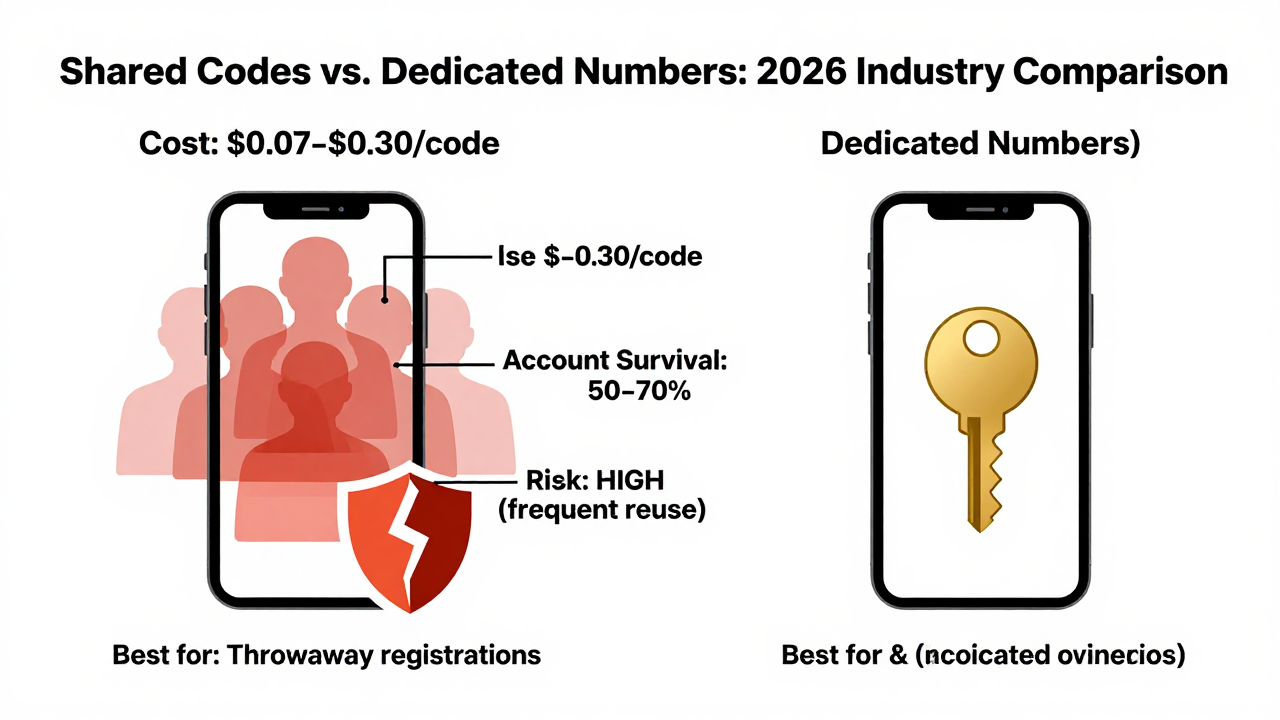
Shared Codes vs. Dedicated Numbers: 2026 Industry Comparison
| Comparison Factor | Shared Codes (One-Time) | Dedicated Numbers (Private) |
|---|---|---|
| Cost per Unit | Low (roughly $0.07–$0.30) | High (roughly $0.70–$2.80/month) |
| Account Survival Rate | 50%–70% | 85% or higher |
| Best Use Cases | Temporary registrations, low-stakes accounts | Long-term operations, payment binding, social accounts |
| Risk Control Exposure | High (frequent number reuse) | Low (exclusive number usage) |
| Provider Examples | Most small verification sites | Getfollow and similar operations-heavy platforms |
This table isn't telling you to always pick the expensive option. It's helping you match the choice to your current stage. Just testing a market? Shared codes will do. Planning to build a long-term presence on a platform? Dedicated numbers are a necessary investment.
The 2026 Shift: SMS Verification Is Moving from "Tool" to "Service"
Here's what I'm seeing: the cloud SMS verification industry is going through a major consolidation in 2026. The old "register, use, discard" model is being replaced by comprehensive packages that bundle number quality, risk consultation, and after-sales support.
The reason is straightforward. Overseas platform algorithms have gotten too smart. Swapping IPs and spoofing devices doesn't fool them anymore. Number reputation has become the scarcest resource in the game.
So if you're still using bargain-bin shared codes to register your core business accounts in 2026, I'd urge you to pause and ask yourself: is the few dollars you're saving worth the cost of losing a stable, long-term account?
And one final piece of advice that's served me well: test small, then scale. No matter which SMS verification provider you're considering, don't rush into bulk orders. Spend a few dollars on a handful of numbers, observe them for a week, and let the data make your decision for you.
In cross-border business, the devil is in the details. A single verification code sits at the foundation of your entire operation's credibility. I hope this guide helps you avoid at least one unnecessary headache.
Frequently Asked Questions
What is the best international SMS verification service in 2026?
There's no single "best" provider — it depends on your use case. For high-stakes accounts that need long-term stability, platforms like Getfollow that offer dedicated number segments and compliance guidance tend to perform best. For casual, one-off registrations, cheaper shared-code services can work, but expect lower account survival rates.
Why do my accounts get banned after using SMS verification codes?
Bans usually happen for one of three reasons: the number was previously flagged by the platform's risk system, you're registering too many accounts from the same IP or device, or the platform detects patterns consistent with batch registration. Using dedicated numbers with consistent login environments dramatically reduces this risk.
How much does cloud SMS verification cost in 2026?
Pricing varies widely. Shared codes can cost as little as $0.07 per message, while dedicated numbers typically run $0.70 to $2.80 per month depending on the country and carrier type. Physical SIM numbers from major carriers cost more than VoIP numbers but have much better success rates with banks and payment platforms.
Can I use SMS verification numbers to register multiple accounts on the same platform?
Technically yes, but it's risky. Most platforms in 2026 have sophisticated anti-fraud systems that flag accounts sharing the same number, IP, or device fingerprint. If you need multiple accounts, use dedicated numbers paired with separate browser profiles and residential IPs — and even then, proceed with caution.
Are SMS verification services legal?
The services themselves are legal in most jurisdictions. However, using them to create fake accounts or violate a platform's terms of service sits in a gray area. Always review the terms of both the verification provider and the platform you're registering on. Reputable providers will be transparent about acceptable use cases.