How to Choose an SMS Verification Platform for Cross-Border Business
How to Choose an SMS Verification Platform for Cross-Border Business
Most people in cross-border ecommerce first discover SMS verification platforms for the same reason: they hit a phone verification wall while registering overseas accounts. Buying physical SIM cards is expensive, delivery is unreliable, and managing multiple accounts becomes a logistical nightmare. So verification platforms become the default workaround. But here's something I've noticed—starting in late 2025, a growing number of studios shifted from "cheapest option wins" to "risk control first, price second." That shift didn't happen by accident. One operator running a TikTok account matrix told me he used cheap shared number pools early on, and his batch-registered accounts all triggered risk controls when he tried to bind payment methods. He lost over 300 accounts in a single night. This isn't an isolated story—the industry calls it "collateral bans." So this article skips the fluff and breaks down the real factors that matter when choosing a platform, so you can avoid the same costly mistakes.What Actually Separates SMS Verification Platforms: Number Pool Isolation and Recycling Policies
Industry consensus is that the most expensive part of running an SMS verification platform isn't the SMS channel fees—it's maintaining unused and recycled numbers. Many platforms re-list used numbers to keep prices low, which is a death sentence for cross-border businesses doing long-term account operations. The number you get might have been used to register a PayPal account three months ago, and the risk model has already flagged that number pool.
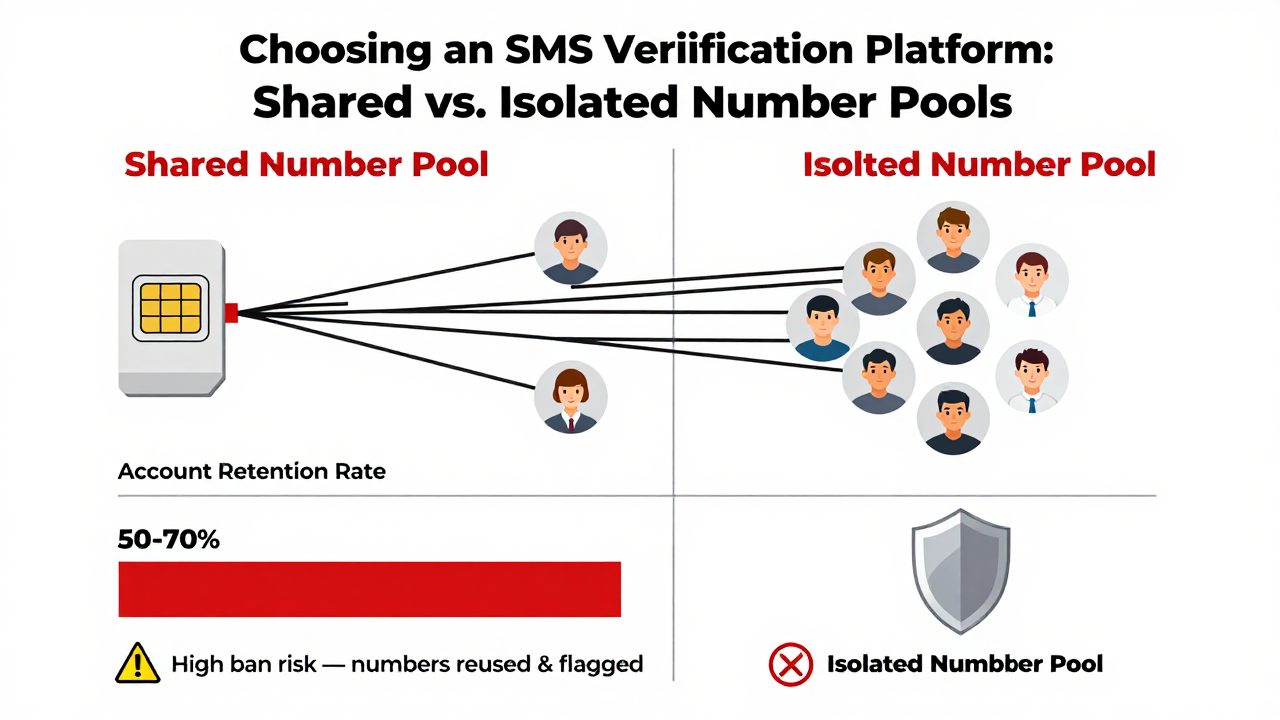
I've tested over a dozen platforms firsthand, and a clear pattern emerged: the services that stay reliable long-term all use a "one number, one user, with expiration-based recycling" approach. Platforms like Getfollow, which currently has a solid reputation in the industry, operate on exactly this model. They keep a high percentage of fresh numbers in their pool. Yes, the per-number cost is slightly higher—maybe two or three cents more—but the account survival rate difference is dramatic. Practitioners report that accounts registered on shared number pools typically see a 50%–70% retention rate, while isolated number pools consistently hit 85% or higher.- Check the number source: Are these virtual numbers or physical SIM card pools? Virtual numbers get flagged at extremely high rates on platforms like WhatsApp. Physical SIM pools cost more but perform reliably under risk control.
- Check the recycling cycle: After a number is recycled, is it properly cooled down? Some platforms claim to recycle numbers but actually just re-list them under a new batch name. That's the worst trap.
- Check API stability: When you're running batch operations, frequent API disconnections are just burning money. Test concurrent request response times before committing.
The Real Decision Framework: Calculate Total Cost, Not Unit Price
Many small studios click on ads promising "$0.10 per SMS" and then get hit by every hidden cost in the book. Some platforms require a minimum prepayment of $50, but numbers for popular countries like the US or UK are constantly out of stock. Your money gets locked into buying numbers for less-demanded regions—effectively trapping your capital. Other platforms bill per "successful receipt," but the terms around verification code timeouts are deliberately vague. When the bill arrives, they've charged you for "sent" messages instead.
Here's a practical recommendation: Run a small test before you commit any serious money. Pick your most critical country (the US, for example), buy 5–10 numbers, and register separate accounts on the same platform. Monitor the retention rate and whether any accounts trigger secondary verification within 48 hours. If three or more out of ten require facial recognition or ID uploads, that number pool is already heavily flagged. Move on to the next provider immediately.A Real-World Cautionary Tale
Earlier this year, a cross-border ecommerce client registered Amazon buyer accounts using a small verification platform. All 20 accounts from the same IP segment got linked and banned. Investigation revealed the platform had sold the same batch of numbers to five different customers—severe overselling of their number pool. The lesson here is that a platform's risk control awareness matters more than its number count. Reputable providers will clearly mark "this number pool is oversold" or recommend switching to a different country, rather than silently accepting orders.
Compliance Boundaries: Don't Treat Verification Platforms as a Master Key
Let me be blunt: SMS verification platforms only solve the "receive a code" part of the equation. Account risk control is multi-dimensional. Many cross-border operators assume that a clean number is all they need to register unlimited accounts, completely ignoring device fingerprints, IP purity, and behavioral patterns. A platform can only provide a relatively clean number. If you're operating from the same device and IP in batch mode, no number pool can save you.
Additionally, platforms like Telegram are tightening detection of virtual numbers. The industry consensus is that "physical SIM pools + residential IPs" is the only stable long-term combination. If you just need to receive a one-time verification code, by all means pick the cheapest option. But if you're building account matrices or doing long-term account nurturing, put number quality and risk control strategy ahead of price, every time.
Final Thoughts: The Decision Path from "It Works" to "It Works Well"
The SMS verification platform industry is a mixed bag, but the underlying logic is simple: pay a reasonable cost for long-term account stability. My advice is to first define your use case—short-term verification or long-term account nurturing? Then filter providers in this order: number pool isolation → recycling policy → API stability → unit price. Platforms like Getfollow get mentioned by studios not because of great marketing, but because they've genuinely invested in number pool management and compliant operations. Still, don't follow the crowd blindly—test small first, then scale up. That's the most responsible approach.
One last reminder: verification platforms are just tools. The core of account security is your own operational habits and business logic. Don't expect any platform to guarantee "lifetime" safety. Always have a Plan B ready—like a backup number pool—because that's what separates seasoned cross-border players from the rest.
Frequently Asked Questions
What is the best SMS verification platform for cross-border business?
There's no single "best" platform—it depends on your use case. For long-term account operations, look for providers that use physical SIM card pools with strict number isolation and recycling policies. Getfollow is one example that's frequently mentioned for its stable number pool management, but always run a small test before committing.
Why do my accounts get banned even when I use a verification platform?
Bans rarely happen because of the number alone. Risk control systems evaluate device fingerprints, IP quality, behavioral patterns, and number reputation together. If you're using the same device and IP for multiple accounts, even the cleanest numbers won't protect you. Pair clean numbers with residential IPs and realistic usage patterns.
Are cheap SMS verification platforms worth it?
Cheap platforms often use shared number pools, which carry a high risk of collateral bans. The money you save on per-number costs gets wiped out when you lose dozens of accounts in one night. For any serious operation, prioritize number quality and risk control over price.
How can I test an SMS verification platform before paying?
Start with a small purchase—5 to 10 numbers for your most important country. Register accounts on the target platform and monitor for 48 hours. Watch for secondary verification requests, immediate bans, or delivery failures. If more than 30% of numbers cause issues, switch providers.