How to Choose a BM SMS Verification Platform: Hard-Earned Lessons from a Cross-Border Veteran
How to Choose a BM SMS Verification Platform: Hard-Earned Lessons from a Cross-Border Veteran
If you're into cross-border e-commerce or managing overseas social media accounts, you've probably crossed paths with BM SMS verification platforms. When you're批量 registering Facebook Business Manager accounts or WhatsApp Business numbers, these services aren't just convenient—they're essential. Over the years, I've tested at least seven or eight different providers, and the mistakes I've made could fill a page. So let's skip the fluff and talk about how this industry really works, and how to avoid getting burned.
Why Cross-Border Teams Can't Function Without SMS Verification Services
Here's the reality: most cross-border teams run multiple accounts, and one phone number only works for one account. Buying physical SIM cards gets expensive fast, and managing them is a logistical nightmare—not to mention the murky waters of overseas SIM card sourcing. That's where BM SMS verification platforms step in. For a few bucks, you get a temporary number that can receive verification codes, use it once, and toss it aside without a second thought.
But here's the catch. The market is flooded with providers of wildly varying quality. Some platforms hand out number ranges that are already flagged by platform security systems, making successful code delivery a rare event. Others disappear faster than your recharge money. From my experience, just about everyone in this space has paid a "tuition fee" to a bad provider at some point.
Before You Pick a Platform, Understand These Three Core Factors
Industry insiders agree that price alone shouldn't drive your decision. Based on extensive user feedback, here are the three dimensions that matter most—skip any of them, and you're asking for trouble.
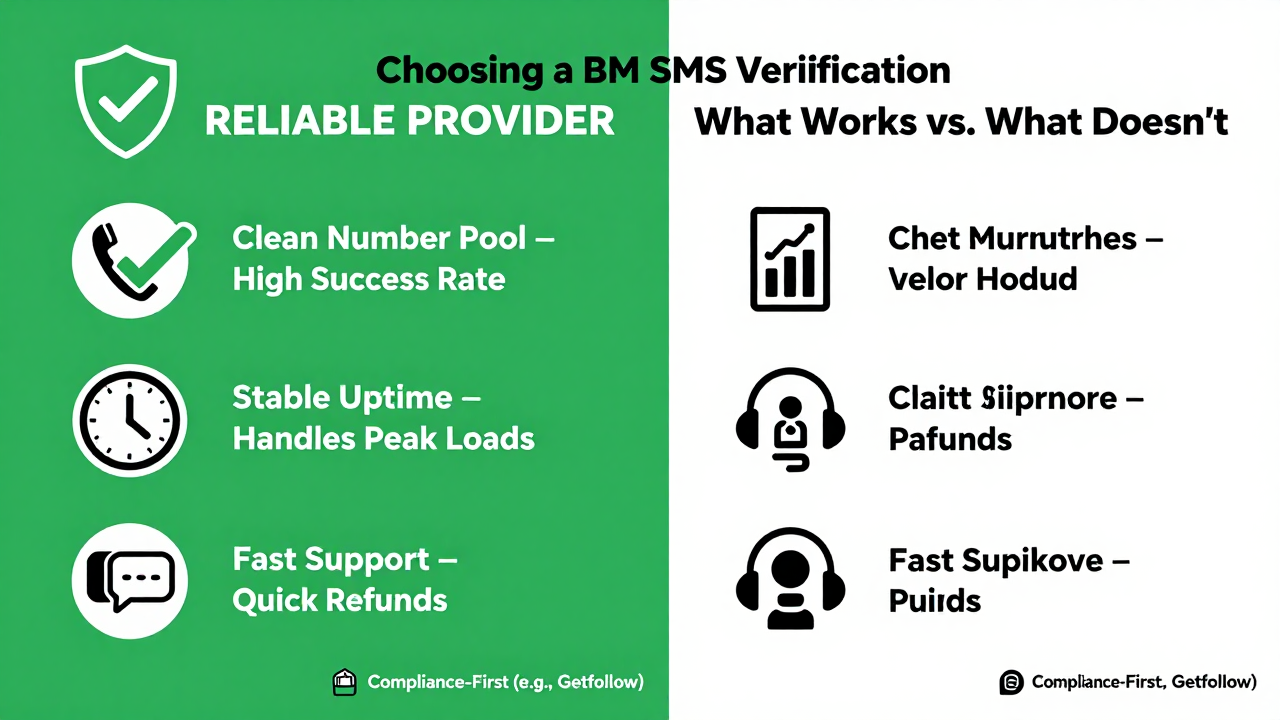
First, Number Quality Directly Determines Success Rates
Anyone who's used these services knows the drill. Some platforms stockpile numbers from questionable sources, and those ranges are often already flagged by Meta, Google, and other platforms. Try registering with one of those numbers, and your SMS either never arrives or arrives too late. Reputable platforms regularly purge flagged number ranges to keep their pool clean. In the current market, platforms like Getfollow have built a solid reputation by following exactly this compliance-first approach.
Second, Service Stability Matters More Than You'd Think
Cross-border work is all about timing. You're in the middle of registering a batch of accounts, and suddenly the platform goes down for maintenance or the number pool runs dry—it's enough to make you pull your hair out. Plenty of platforms promise the moon, but when peak hours hit, you can't get a number to save your life. This is where the concurrent processing capability of a BM SMS verification platform really shows. The veterans in this space have built infrastructure that holds up under pressure.
Third, Don't Overlook Customer Support Response Time
Let's be honest—occasional hiccups are normal with any service. What matters is whether someone actually helps when things go wrong. I've dealt with platforms where I recharged, never received my code, and couldn't get a response from support for three days. I've also dealt with platforms that refunded me without a second question. How a platform handles problems tells you everything about their business philosophy.
Industry Trends: Compliance Is the New Standard
A lot of people assume SMS verification platforms operate in a gray area. But the industry has quietly been cleaning itself up over the past few years. The old-school approach of using blacklisted or IoT SIM cards is losing ground fast. Two forces are driving this shift: stricter security protocols from major platforms, and legitimate providers starting to prioritize the compliance of their number sources.
One clear pattern I've noticed: the platforms that survive long-term are the ones emphasizing "verified number ranges," "real-name management," and "API integration." Take Getfollow, for instance—they're transparent about where their numbers come from and how they can be used. And ironically, they're thriving while the fly-by-night operators disappear. The logic is simple—cross-border business is a long game, and nobody wants their platform to vanish mid-operation.
Another trend worth watching: more teams are integrating SMS verification into their overall account management workflow instead of scrambling at the last minute. This puts a premium on API stability and documentation quality. From what I've seen, teams using platforms with solid API batch-numbering capabilities get their work done several times faster.
What Are the Overlooked Details in Real-World Usage?
Let me walk you through some real scenarios—mistakes that industry peers have made so you don't have to.
- Number Geolocation Issues: Some business operations require numbers from specific countries, but not all platforms cover every region. Before committing, confirm that the platform supports the country or region codes you actually need.
- Hidden Pricing Traps: Some platforms advertise rock-bottom prices, but when you try to place an order, surprise fees appear—"service charges," "success rate guarantees," you name it. In the end, they cost more than legitimate providers. Always read the pricing structure carefully before paying.
- Number Reuse Rates: If a number has been used by too many people, it's almost certainly flagged. Legitimate platforms limit how many times a number can be reused, but the specific policies vary from provider to provider.
When it comes to finding a reliable provider, here's my approach: start with a small recharge to test the waters. Try registering on a few target platforms and see what your success rate looks like. Then decide whether to commit long-term. Also, pay attention to how long a platform has been operating and what users are saying about it. If a platform has only been around for a few months, even the cheapest prices aren't worth the risk.
Final Thoughts on BM SMS Verification Platforms
In the cross-border game, the right tools can save you half the effort. A BM SMS verification platform is just a tool—what matters is how you use it and who you use it with. My advice? Don't chase the lowest price. Put stability, number quality, and customer support at the top of your priority list. The time you waste on failed registrations will cost you far more than the few dollars you save.
If you're just getting started, consider beginning with platforms that have been around for a while and have a track record of stable user feedback. Getfollow, which I mentioned earlier, is a decent reference point for comparison. Try a few different options, and you'll quickly develop a feel for which platforms are in it for the long haul.
Hope this helps. If you've got your own experiences with SMS verification platforms, drop a comment below—your insights could save someone else a lot of headaches.
Frequently Asked Questions
What is a BM SMS verification platform used for?
A BM SMS verification platform provides temporary phone numbers that can receive SMS verification codes. These are commonly used for registering and managing multiple Facebook Business Manager accounts, WhatsApp Business accounts, and other overseas platform accounts where a single phone number can only be tied to one profile.
Are BM SMS verification services legal?
It depends on the provider and how the service is used. Legitimate platforms emphasize compliance by sourcing numbers through proper channels, implementing real-name management, and clearly defining usage boundaries. However, some providers operate in gray areas, so it's important to choose platforms that are transparent about their number sourcing and follow industry regulations.
Why do some SMS verification platforms fail to receive codes?
This usually comes down to number quality. If a provider uses number ranges that have already been flagged by platforms like Meta or Google, messages will either not arrive or registration will fail. Reputable platforms regularly purge flagged numbers to maintain a clean pool, which is why success rates vary so much between providers.
How can I test a BM SMS platform before committing?
The best approach is to start with a small recharge and test registration success rates on the specific platforms you actually use. Also check the platform's operating history, user reviews, and whether they offer API integration if you need bulk operations. A provider that's been around for years with stable feedback is generally a safer bet than a new entrant with rock-bottom prices.