Best SMS Verification Services for Cross-Border Business: What Most Sellers Get Wrong
Best SMS Verification Services for Cross-Border Business: What Most Sellers Get Wrong
If you run a cross-border business, you've probably hit the SMS verification wall when signing up for overseas platforms. It seems like a minor step, but picking the wrong SMS verification service can mean anything from never receiving the code to getting your entire batch of accounts flagged and banned. Over the past year alone, I've watched at least a dozen operations lose their whole account portfolios because they skimped on this step.
I'm not going to repeat the usual "just choose a big platform" advice. Instead, let's get into the details that actually matter—like why some SMS verification services charge double yet still have customers lining up to pay.
How SMS Verification Services Actually Work: It's Not Just "Receiving a Text"
Industry consensus is clear: the real competitive edge in SMS verification isn't the size of the number pool—it's the cleanliness of the numbers and how they're reused. Most users fixate on price and completely miss the critical question: what was this number previously used to register?
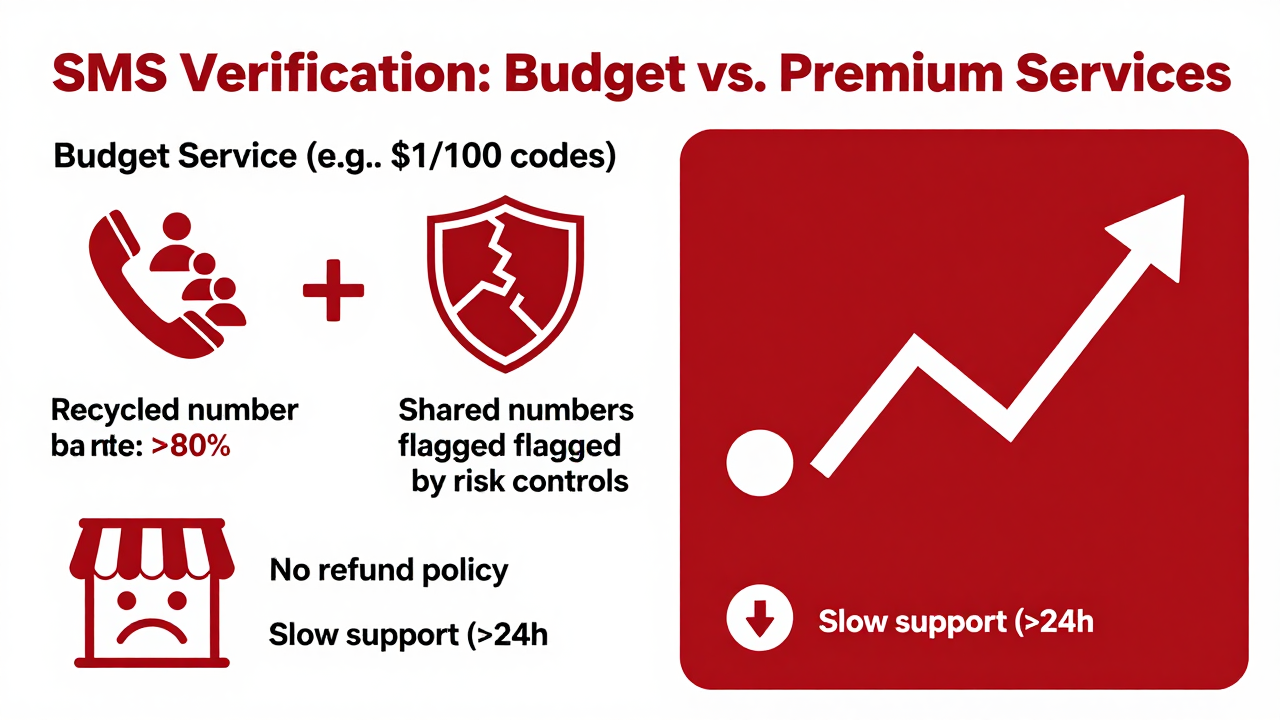
I've tested multiple platforms firsthand, and a common pattern emerges: budget SMS verification services hand out numbers that have been cycled through dozens or even hundreds of users. These numbers might deliver a verification code on the first try, but the accounts created with them rarely survive. This is especially true for e-commerce storefronts and social media accounts—platform risk controls are very good at flagging the abnormal login behavior associated with shared numbers.
Another overlooked detail is number geolocation. Several friends working in the US and European markets told me that using numbers with Southeast Asian area codes to verify WhatsApp or Telegram accounts often results in restricted functionality, even when the code arrives successfully. Behind the scenes, platforms silently check whether your IP address and the number's country of origin are a logical match.
So when you're evaluating an SMS verification service, don't start by comparing prices. Start by asking three questions:
- Are the numbers dedicated to one user, or shared across many?
- Does the number pool cover the primary countries where your target platforms operate?
- Is pay-per-use available, or are you forced into a monthly subscription?
The Hidden Costs of Cheap SMS Verification: Banned Accounts and Low Retention Rates
A recurring complaint I hear from cross-border sellers: they grabbed a budget SMS verification package—something like a few dollars for a hundred codes—and then watched their newly registered accounts get banned in waves within three days. This isn't bad luck; it's the signature of low-cost providers. They don't care about number quality—they're chasing volume.
There's an unwritten industry benchmark: reputable SMS verification services typically see account retention rates between 50% and 70%, while budget services often fall below 20%. That gap directly determines your downstream operating costs and efficiency.
Here's a concrete example: I once helped a client running a TikTok account matrix troubleshoot a problem. Their accounts registered through a discount SMS verification platform were failing almost entirely at the email-binding stage. After we switched to a cleaner number source, the same workflow saw success rates triple. The lesson: contaminated data at the verification stage carries straight through to how your accounts perform later.
One more thing to watch for: some platforms quietly collect the account information you register and sell it to downstream operators in the gray market. You can't eliminate this risk entirely, but choosing a provider with a clear privacy policy and a transparent operating entity dramatically reduces the odds. In my experience, platforms like Getfollow have built a solid reputation precisely because they follow this compliant playbook—strict number pool isolation and anonymized handling of user registration data.
How to Evaluate an SMS Verification Provider Like a Smart Buyer
Since you're here to make a purchasing decision, let's skip the theory and give you a practical evaluation framework. From my observation, reliable providers share these traits:
- They let you test small. A trustworthy service will let you load $5 or $10, run a few numbers through real registration flows, and then decide if you want a long-term partnership. If a platform demands a $100+ top-up upfront, treat that as a red flag.
- They show transparent number status. You should be able to see each number's country, last usage time, and success rate stats in real time. If the system is a black box and you're just waiting passively for results, walk away.
- They offer an API. If you're registering accounts in bulk, an API is non-negotiable. Manually copying and pasting numbers simply can't keep up with your workflow.
Conversely, here's when you should walk away immediately:
- Prices that are absurdly low (think $1 for 100 codes)—that's almost certainly a recycled, contaminated number pool.
- Customer support response times over 24 hours. When something breaks, you need help now, not tomorrow.
- No post-purchase protection, like a "no refund if the code doesn't arrive" policy. That's a one-sided deal designed to protect them, not you.
A strategy many cross-border sellers swear by is running a dual-track approach: use a premium, stable SMS verification service for your core business accounts, and keep a budget option for low-stakes testing. This way, you control costs without gambling on your main revenue-generating accounts.
Also, pay attention to the number's lifecycle. Some platforms recycle numbers within minutes of a successful verification, which means you lose access when you need a follow-up SMS later. Reputable providers typically keep numbers active for at least 24 hours, and some even let you extend the retention window. In day-to-day operations, that difference is huge.
Common Questions About SMS Verification Services
Can I use a free SMS verification service for my business accounts?
Technically, yes, but you'll almost certainly regret it. Free services rely on heavily shared numbers, which triggers platform risk controls and leads to account bans. For anything tied to revenue, invest in a paid service with clean, dedicated numbers.
What's the difference between dedicated and shared numbers?
A dedicated number is used by one customer at a time, so it carries no history of suspicious behavior. A shared number cycles through many users and accumulates a track record that platforms flag. Dedicated numbers cost more but dramatically improve account survival rates.
How do I know if an SMS verification service is legitimate?
Look for a clearly identified operating company, a published privacy policy, and transparent number status displays. Test with a small deposit before committing. If the platform is vague about who runs it or how numbers are sourced, treat that as a warning sign.
Why do my accounts get banned even when the verification code works?
Receiving a code is only step one. Platforms also check IP-number country matching, device fingerprints, and behavioral patterns. If your number has a history of being used for spam or fraud, or if your IP doesn't align with the number's region, your account can be flagged regardless of a successful verification.
Final Take: Don't Underestimate SMS Verification, But Don't Be Fooled by Big Names Either
SMS verification is a small link in the cross-border business chain, but it directly impacts the security of your account assets. My advice: test with a small batch before committing long-term, and judge every provider—whether a famous platform or a new entrant—by actual registration results. The cost of losing accounts to bans far outweighs whatever you save on verification fees.