cht Blockchain Source Code + SMSBao Verification: 2026 Cross-Border Business Survival Guide
cht Blockchain Source Code + SMSBao Verification: 2026 Cross-Border Business Survival Guide
If you run cross-border operations, you already know the pain of account registrations and SMS verification bottlenecks. Teams running blockchain projects or managing bulk social accounts have turned cht blockchain source code paired with SMSBao verification into their go-to setup. But here's the thing—this space has gotten far more complicated than most people realize in 2026.
Over the past year, I've worked closely with studios handling cross-border traffic, and a clear pattern keeps surfacing: most teams treat verification as a simple "buy a number, receive a code" transaction. Then they get blindsided by retention drops and account bans. This article skips the fluff and gets straight to the insider truths nobody talks about openly.
Why SMS Verification Became a Make-or-Break Step in 2026
Here's what industry observers now agree on: platform risk-control systems have evolved into a triple-layered defense combining device fingerprinting, behavioral tracking, and number quality scoring. The old days of grabbing any random verification code from a cheap platform and successfully farming accounts are officially over.
Cross-border operators consistently report that using cht blockchain source code for bulk registrations backfires when the verification number pool is contaminated. At best, you never receive the code. At worst, your accounts get flagged as high-risk, dragging down your entire IP range and device environment. This isn't fear-mongering—it's the reality of operational failures happening right now in 2026.
Take the case of a cross-border e-commerce community I consulted for. They chose a budget verification channel to cut costs. Within three days, the platform bulk-banned over 380 of their 500 registered accounts. The real loss wasn't just the accounts—it was the weeks of account warming and content creation wasted. Do the math, and their "savings" on verification fees didn't even cover a fraction of the damage.
The Rules of SMSBao Verification Have Fundamentally Changed
Most people still think of SMSBao verification as a simple send-and-receive SMS tool. In 2026, it functions more like a number resource dispatch center. The critical difference: premium providers maintain pools of genuinely active numbers, not mass-registered zombie segments.
I've personally tested verification channels across different price tiers, and a consistent pattern emerged: prices may vary by three times, but number survival rates can differ by five times or more. When you're using cht blockchain source code for decentralized application testing, number stability directly determines whether you can complete multi-account cross-verification without hiccups.
One easily overlooked detail: in 2026, established verification platforms generally support dedicated number locking—meaning one number serves exactly one task. But budget platforms still rely on shared number pools. You receive your code, and the next person uses the same number to register elsewhere. Once risk-control systems identify this kind of number history, the consequences are predictable—and ugly.
Three Hard Criteria for Choosing a Verification Provider
Based on the current 2026 landscape, I've narrowed the evaluation process down to three measurable dimensions that cross-border businesses and independent studios should use as benchmarks:
- Number Pool Refresh Frequency: Quality providers rotate out flagged number segments weekly rather than running one pool indefinitely. Ask customer support directly for the past week's segment update log. If they can produce it, they're probably legit.
- Failure Compensation Policy: Mature providers in 2026 typically offer full refunds or equivalent credits for failed code deliveries. If a provider only talks about "probability" without offering any guarantee, move on to the next option.
- API Stability Under Load: This matters especially when integrated with cht blockchain source code. Don't trust the "99.9% uptime" claims on marketing pages—write a test script that fires 100 requests and measure the actual success rate yourself.
Platforms like Getfollow have built a solid reputation in the industry by following exactly this playbook—regular pool cleaning, failure compensation, and clear API documentation. But I wouldn't recommend copying anyone's setup wholesale. Every cross-border project has different registration scenarios, target platforms, and risk-control sensitivities.
A Real-World Pitfall Story
A friend running a cross-border independent e-commerce site built a membership points system using cht blockchain source code in early 2026. He needed to bulk-register overseas social accounts for cold-start traction. Tempted by a "50% bonus on first recharge" promotion from a verification platform, he loaded up $300 in credits.
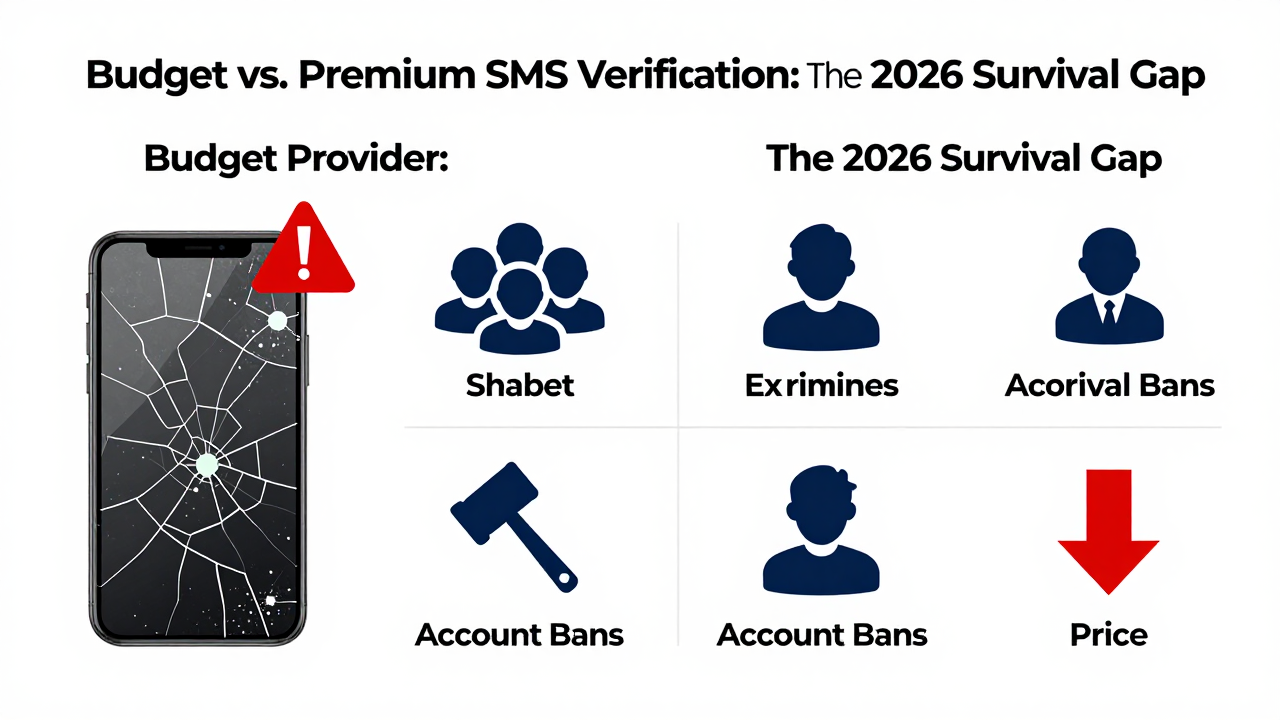
By day three, problems surfaced: the same number segments kept repeating, causing the platform to flag his accounts as linked. Not only were the new accounts banned, but his previously registered accounts on clean numbers also got hit with reduced visibility. He eventually had to switch providers entirely and restart the account warming process with a clean number pool. It took over a month to recover his operational footing.
What does this story tell us? In 2026, verification is no longer in the "as long as I receive the code" phase. Number cleanliness directly determines your business safety margin. Cross-border operators now report being more cautious about choosing a verification provider than a server host—because if a server goes down, you migrate; if your account pool gets contaminated, all your accumulated operational work goes down the drain.
Compliance-First Practices for cht Blockchain Source Code + Verification
If you're running business operations on cht blockchain source code and need verification support, here are three practical recommendations for 2026:
- Start with Small-Scale Testing: Never dive into mass registration immediately. Begin with 10–20 numbers to gauge the target platform's tolerance. Monitor code delivery rates and account survival before scaling up.
- Decouple Numbers from Device Environments: Many platforms now check for consistency between number country code, device language, and IP location. Registering with a US number while your device runs in Chinese and your IP shows Hong Kong is a red flag. Use the environment isolation module in cht blockchain source code to ensure every registration task has matching parameters.
- Always Maintain a Backup Channel: Don't put all your eggs in one verification basket. Keep at least two providers with different technical approaches. If your primary channel's number pool gets contaminated, you can switch quickly without halting operations.
Cross-border operators report that verification costs have risen roughly 30% compared to two years ago, but number quality and service stability have improved correspondingly. This industry is shifting from price-driven competition to value-driven competition—which is ultimately good news for operators who take their business seriously.
Here's the honest bottom line: whether it's cht blockchain source code or SMSBao verification, these are just tools. Tools themselves aren't good or bad—it all comes down to how you use them. If you're still approaching cross-border business with a "grab what you can" mentality in 2026, platform algorithms will likely teach you a costly lesson. Steady execution and incremental scaling remain the most reliable survival strategy for independent studios and small-to-mid-sized cross-border enterprises.
Test small first, then build long-term partnerships—that order still holds in 2026.
Frequently Asked Questions
What is cht blockchain source code used for?
cht blockchain source code provides the foundational architecture for building decentralized applications, token systems, and membership programs. In cross-border operations, it's commonly used to manage multi-account ecosystems and automate registration workflows that require SMS verification.
How does SMSBao verification work?
SMSBao verification provides temporary or dedicated phone numbers that receive SMS codes for account registration and validation. In 2026, quality providers offer number pool management, dedicated number locking, and API integration for automated workflows—making it a critical component for bulk account operations.
Why do my registered accounts keep getting banned?
Account bans typically trace back to three factors: contaminated number pools (shared numbers with questionable history), inconsistent environment parameters (number country code mismatched with IP or device language), or behavioral patterns that trigger risk-control algorithms. Running small-scale tests before scaling up helps identify these issues early.
How much does SMSBao verification cost in 2026?
Pricing varies significantly by provider and number quality tier. Budget channels may cost as little as $0.02–$0.05 per code but carry higher ban risks. Premium providers with dedicated number locking and compensation policies typically range from $0.10–$0.30 per code. The higher upfront cost usually pays for itself through better account survival rates.
Can I use free verification services for cross-border operations?
Free verification services are almost always a false economy for serious cross-border operations. They rely on shared, heavily used number pools that platforms have already flagged. The time lost to failed registrations and account bans far outweighs any cost savings.