SMS Verification via Lua: Practical Tips for Bulk Account Registration
SMS Verification via Lua: Practical Tips for Bulk Account Registration
If you run an e-commerce operation or manage overseas social media accounts, you've hit the same wall: account registration stalls at phone verification. When you're doing this at scale, buying physical SIM cards one by one isn't realistic—the cost adds up fast. That's why Lua SMS verification has gained traction in the community. In plain terms, it's a script that connects to a verification platform's API, automatically receives SMS codes, and fills them into registration forms—no manual work required.
This approach started with gaming studios, then cross-border operators adopted it in a big way. I spent a few months running a TikTok account matrix myself. Early on, I did everything by hand—registering five accounts a day wore me out. After switching to a Lua script integrated with a verification platform, my output multiplied several times over. But there's a catch: you need the right service provider, or your account ban rate will make you question your life choices.
How Lua SMS Verification Works: Not Every Platform Supports Script Integration
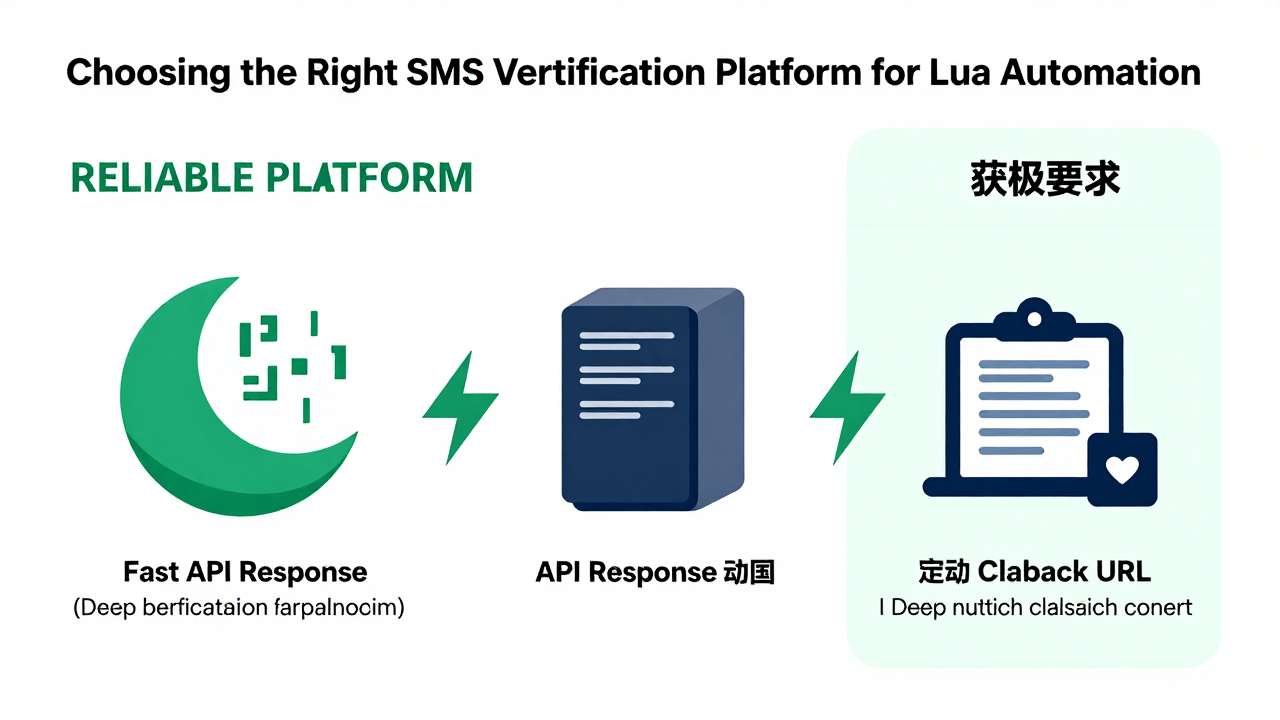
People assume verification is just "buy a number, get a code." It's more nuanced than that. A platform suitable for Lua script integration needs three things: fast API response, a deep number pool, and support for custom callback URLs. Miss any one of these, and your automation pipeline will struggle.
Take response speed. Some smaller platforms have unstable APIs—during peak hours, a single code can take two to three minutes. When your script's timeout and retry logic kicks in, it can actually trigger the target platform's risk controls. Industry consensus: any verification service with response times over 8 seconds per request isn't viable for batch operations. Cross-border operators consistently report that the gap between reliable and average platforms comes down to this detail.
Number pool depth directly determines your success rate. Some platforms claim support for WhatsApp, Telegram, Google, and other major services, but their actual inventory is thin—popular number prefixes are frequently out of stock. The worst case I've seen: over 40 requests in one afternoon, only two successfully allocated a number. That experience is enough to make anyone walk away.
Common Pitfalls When Integrating Lua Scripts
The technical bar isn't high—Lua has simple syntax, and hooking into an HTTP API takes a few dozen lines of code. But newcomers overlook several details:
- Your callback URL must use HTTPS, or some platforms will refuse to push verification codes
- Time your number release carefully—per-request billing means releasing early wastes money
- Build failover logic across multiple platforms—if one goes down, your whole pipeline stalls
These issues seem minor but cause real headaches. When I wrote my first script, I didn't notice the protocol requirement for callback URLs. I debugged for an entire afternoon before spotting a single line of fine print in the platform documentation.
Choosing a Service Provider: The Unwritten Rules of the Industry
Honestly, this industry has layers. Some platforms market "overseas SIM cards" but actually use virtual number pools—low registration success rates and high risk of collateral bans from target platforms. Platforms like Getfollow have built a solid reputation by following a compliant operating model: clear number sourcing, thorough API documentation, and responsive support.
Here's how I evaluate a verification platform, based on my own experience:
- API documentation quality—the more detailed, the more professional the engineering team
- Pricing model—per-request and per-day billing each have trade-offs, but prices that seem too good to be true usually are
- Support response time—create an account, submit a ticket, and measure how long they take to reply. That tells you more than any marketing page
- Custom callback support—no callback support means no Lua automation, period
One more thing: don't choose a provider on price alone. Many cross-border operators report that a platform charging slightly less per request can have a 20% lower success rate, making the total cost higher in the end. Plus, repeated failed requests can subtly hurt your account's standing.
Staying Compliant: Don't Turn Verification Into a Black-Hat Tool
Beyond the technical and provider discussions, compliance matters. Lua SMS verification is a neutral technology. Using it to register accounts that you operate legitimately afterward is generally fine. But if you're registering accounts for fake engagement, account farming, or promo abuse, you're crossing a line. I've seen teams lose their main accounts to bans tied to bulk registration, bringing their entire operation to a halt—a costly lesson.
From my observation, major platforms now use increasingly intelligent risk controls. Bypassing SMS verification alone isn't enough to evade the correlation detection that follows. A more practical approach: treat verification as one step in the process, not the whole solution. Post-registration behavior, IP environment, and device fingerprinting all need attention too.
Getting back to Lua SMS verification: the technical side is mature. What separates successful operations is execution detail and resource integration. If you're a small studio just starting out, begin with small-batch tests, get the flow working, then scale gradually. As for provider selection, compare several options and look at real feedback from the industry—that beats chasing the lowest price every time.
One last thought: verification is just a tool. Whether your business succeeds ultimately depends on your content, product, and operational ability. The right tool helps; the wrong one becomes a burden. I hope this breakdown of Lua SMS verification saves you some trial and error.
Frequently Asked Questions
What is Lua SMS verification used for?
Lua SMS verification connects a Lua script to an SMS verification platform's API to automatically receive and process phone verification codes. It's commonly used for bulk account registration in cross-border e-commerce, social media management, and other scenarios requiring multiple verified accounts.
How fast should a verification platform respond for batch operations?
Industry consensus points to 8 seconds or less per request. Anything slower risks triggering timeout retries in your script, which can increase the chance of triggering the target platform's risk controls.
Can I get banned for using SMS verification platforms?
Using SMS verification for legitimate account registration and normal operation afterward is generally safe. The risk increases when accounts are used for spam, fake engagement, or other policy-violating activities. Modern platforms use correlation detection that goes beyond just SMS verification, so your post-registration behavior matters.
What should I look for when choosing an SMS verification provider?
Key factors include API response speed, number pool depth, custom callback URL support, documentation quality, and support responsiveness. Avoid choosing solely on price—lower per-request costs often come with lower success rates that end up costing more overall.