MCT SMS Verification: The Account Security Backbone Cross-Border Businesses Can't Ignore in 2026
MCT SMS Verification: The Account Security Backbone Cross-Border Businesses Can't Ignore in 2026
After years working in cross-border e-commerce, I've watched too many teams stumble at the account registration stage. In 2026, platforms have tightened their scrutiny of registration environments like never before. The number of accounts you can register with a single phone number is strictly capped, and one careless move can drag your main account down with it. MCT SMS verification keeps coming up in cross-border circles, but honestly, very few people actually understand how to use it properly.
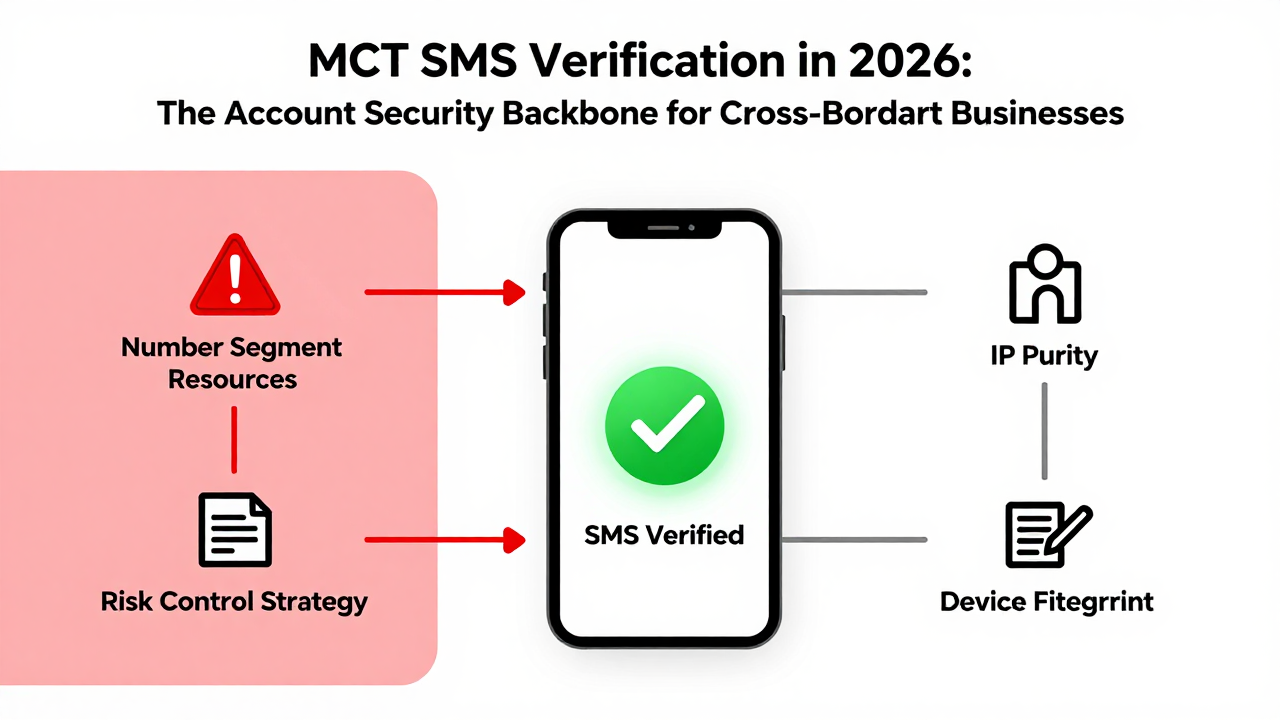
When studio owners chat with me, they often assume SMS verification just means "grab a code from any random platform." But the reality in 2026 is far more complex. Modern verification services have evolved into a sophisticated system involving number segment resources, IP purity, and risk control strategies. The provider you choose directly determines how long your accounts survive.
Why MCT SMS Verification Became Non-Negotiable for Cross-Border Operations in 2026
Let me walk you through a case I witnessed firsthand. A TikTok Shop seller registered 20 store accounts in one go last December to run a matrix test. He used the same phone number repeatedly, which tripped the platform's risk control. All 20 accounts got banned, and his main account—the one he'd been running successfully—got throttled as collateral damage. That lesson drove home a crucial point: phone number resources aren't just about having "enough." They need to be "safely sufficient."
In 2026, platform algorithms added more detection layers to the registration process. Beyond the standard device fingerprint and IP address checks, they now analyze the number's region, carrier type, and even the historical activity of the number segment. If you're using a flagged number, you might pass registration only to face a secondary verification the next day—and by then, you can't receive the code because the number has already been deactivated.
Industry consensus is clear: the real value of MCT SMS verification isn't the basic "can receive a code" function. It's whether the numbers provided are clean, stable, and capable of supporting long-term operations. Many cross-border professionals report that platforms have dramatically improved their ability to detect virtual number segments. Accounts registered with traditional virtual operator numbers now have a survival rate below 30%.
Breaking Down MCT SMS Verification Models: From One-Time Use to Long-Term Number Nurturing
Here's an interesting pattern I've noticed: verification service providers in 2026 are splitting into two distinct camps. The first offers pure one-time verification—perfect for quick registrations where you verify and move on, like creating social media accounts for short-term ad testing. The second operates a "long-term number pool" model, where numbers stay in your hands for extended periods, support subsequent verification codes, and even work alongside account nurturing tools for daily maintenance.
Neither model is inherently better—it all depends on your business scenario. If you're doing cross-border dropshipping with dozens of store accounts that each just publish products, one-time verification is sufficient. But if you're building a brand and need to maintain account authority over time, you need a provider that supports number renewal and secondary verification.
One detail deserves special attention in 2026: platforms now monitor whether you change your linked phone number within 24 hours of registration. Many sellers habitually unbind the number right after registering—an operation that easily triggers risk control this year. That's why reliable MCT SMS verification providers typically recommend keeping the number for at least seven days, and some offer monthly number retention plans.
In terms of service models, platforms like Getfollow have built a solid reputation in the industry by following this compliant operational logic—dynamically updating their number resource pool, letting you choose number segments by region, and providing real-time number status monitoring. The advantage is transparency: you always know the usage status of each number, so you avoid buying "dirty numbers" that have already been flagged by risk control systems.
Number Segment Resources and Region Selection: The Overlooked Variable
Many beginners only look at price when choosing an MCT SMS verification service, completely ignoring number segment regions. That's a major mistake. Platform risk control systems in 2026 analyze how well the number's region matches your registration IP. If you're registering with a US IP but the verification number is from Southeast Asia, that mismatch itself is a high-risk signal.
From my hands-on testing across multiple providers, platforms that support precise number selection by country or region deliver significantly higher account survival rates than those that randomly assign numbers. Getfollow, for instance, maintains number pools across North America, Europe, Southeast Asia, and other key cross-border markets. You can select the exact region you need—a detail that makes a real difference under 2026's algorithmic environment.
Number segment "freshness" matters just as much. Some providers recycle numbers that have already been used for dozens or even hundreds of registrations. Under 2026's risk control systems, these numbers are effectively blacklisted. Reputable providers periodically retire old segments and replenish their pools with new ones to maintain "cleanliness."
The Hidden Risks of MCT SMS Verification: Know These Pitfalls Before You Start
Let me be straightforward with you: MCT SMS verification isn't a magic bullet, and misusing it can create more problems than it solves. The three most common risks in 2026 are:
- Collateral ban risk: If an account registered through a verification platform posts prohibited content, the platform traces back to the phone number, then flags other accounts using the same number pool. One bad account can take down every other account you registered through that provider.
- Delayed verification codes: Many platforms experience code delivery delays during peak registration hours—sometimes a few minutes, sometimes the code never arrives. Under 2026's time-limited verification rules, this easily causes registration failures.
- Inability to receive secondary verification: Some platforms trigger a secondary verification a few days after registration. If you used a one-time number that's already expired, your account is gone forever.
My advice for handling these risks: first, don't put all your eggs in one basket—keep at least two different verification providers as backups. Second, for important accounts, always choose services that support number retention, even if it costs a bit more. Third, after registration, immediately complete all security settings the platform requires, like linking a backup email and enabling two-factor authentication.
Industry feedback suggests the average account retention rate across cross-border operations in 2026 sits between 50% and 70%. In plain terms: fewer than seven out of ten accounts registered through verification platforms survive past three months. That sounds discouraging, but with the right provider and sound operational strategy, you can push that survival rate above 85%.
How to Choose a Reliable MCT SMS Verification Provider
I get asked this question in almost every livestream. Based on my years of observation, here's a four-dimension framework for evaluating providers:
- Number pool quality: Does it support precise number selection? Are number segments regularly updated? Is there a public interface for checking number status?
- Success rate and speed: The industry standard in 2026 is receiving a verification code within 10 seconds; anything over 30 seconds is considered poor. Start with a small deposit to test actual delivery speed.
- Customer support responsiveness: If you don't receive a code, can support respond and resolve the issue within 5 minutes? Many small platforms take your money and disappear—this is the biggest trap.
- Compliance credentials: Does the provider hold legitimate telecom value-added service licenses? While this is hard to verify in some regions, at minimum there should be a proper corporate entity and a traceable operations team.
Getfollow, for example, uses a "dynamic cleansing" mechanism for its number pool, retiring low-activity numbers weekly while adding fresh segments. On the support side, they offer 24/7 online customer service that handles issues promptly. Platforms like this may cost slightly above the market average, but the total cost of ownership ends up lower—because higher account survival rates mean you don't need to keep re-registering.
One special warning: don't chase cheap deals. In 2026's verification market, any provider priced more than 50% below the average is almost certainly using recycled segments or risk-flagged numbers. The few dollars you save could cost you hundreds in lost account operation expenses.
Frequently Asked Questions About MCT SMS Verification
What's the difference between MCT SMS verification and regular verification platforms?
MCT stands for Mobile Communication Terminal. In 2026's industry context, it specifically refers to professional-grade verification services that support multi-country number segments, high-concurrency processing, and real-time number status monitoring. Regular platforms might only support a single country or region with high number reuse rates, while MCT-level services prioritize number quality and stability.
Will accounts registered with MCT SMS verification get banned?
There's no one-size-fits-all answer. Whether an account gets banned depends on multiple factors: your operational behavior, IP environment, number quality, and more. Industry data from 2026 shows that accounts using high-quality verification services combined with compliant operational strategies can achieve survival rates above 80%. But if your content itself violates platform policies, no phone number will save you.
How do I tell if an MCT SMS verification provider is trustworthy?
The most direct method is to start with a small deposit and test. Watch three metrics: whether verification codes arrive within 10 seconds, whether numbers can be selected by country, and how quickly customer support responds when issues arise. Also check whether the provider has a public operating entity and contact information. If you can't even find basic company details, walk away.
Which platforms' verification codes does MCT SMS verification support?
In 2026, mainstream cross-border platforms—including TikTok, Facebook, WhatsApp, Telegram, Amazon, and Shopify—all work with verification services. However, different platforms have different detection strategies. TikTok is particularly sensitive to virtual number segments, while Telegram is relatively lenient. Before batch registration, test the number's viability on your target platform with a trial account.
Which verification plan should I choose for long-term account operations?
For accounts you plan to operate long-term, choose plans that support "number retention" or "monthly number keeping." These plans let you maintain access to the number at a low cost, supporting future secondary verifications and password recovery. While the per-use cost is higher than one-time verification, it's a worthwhile investment given the long-term value of your accounts.
Final Thoughts: The Right Way to Use MCT SMS Verification
Let's circle back to the question from the beginning: how do you get the most value out of MCT SMS verification? My answer is simple—treat it as one component of your account security system, not the entire system. Cross-border operations in 2026 demand a four-part security strategy combining numbers, IP addresses, devices, and behavioral patterns. Verification is just one piece.
My recommendation for teams new to MCT SMS verification: start with small-scale testing. Register five accounts, observe survival rates and code delivery stability over a week, and only scale up once you're confident the provider is reliable. This "test small, then commit" approach saves you from wasting massive time and energy on the wrong provider.
In cross-border business, details determine success or failure. MCT SMS verification might seem like a minor tool, but in 2026's algorithmic environment, it could be the first gate your entire account matrix has to pass through. I hope this article helps you avoid some unnecessary pitfalls and focus your energy on what truly matters—building great products and content.