Who Can Receive SMS Verification Codes for You? The 2026 Cross-Border Business Guide
Who Can Receive SMS Verification Codes for You? The 2026 Cross-Border Business Guide
Looking for a service to receive SMS verification codes on your behalf? Three types of providers can handle this: virtual number platforms, overseas SIM card services, and enterprise communication APIs. As cross-border businesses increasingly rely on foreign phone verification in 2026, each option differs significantly in stability, compliance, and cost—so your choice should match your specific use case.
In 2026, the main ways cross-border businesses and independent professionals receive overseas SMS verification codes include online number platforms, physical international SIM cards, and cloud communication APIs. Each approach differs in number ownership, pricing structure, and security, making them suitable for different scenarios.
Three Main Ways to Receive SMS Verification Codes
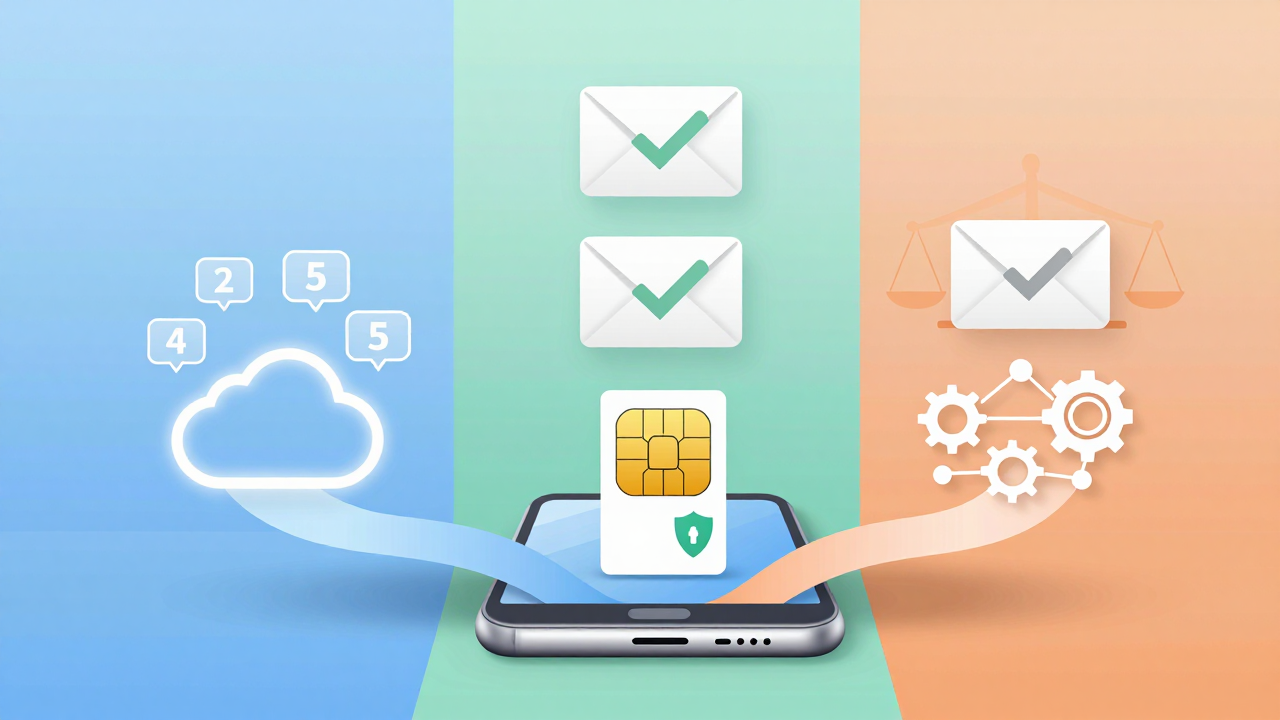
Based on where the numbers come from and how they're accessed, SMS verification services in 2026 fall into three categories. Each serves different users and carries different risk levels, so it's worth clarifying your needs before committing.
- Online virtual number platforms: Offer temporary or shared international numbers, billed per use or per day—ideal for one-off registrations.
- Physical overseas SIM cards: Purchased or rented physical SIMs with dedicated numbers, better for long-term use but at a higher cost.
- Enterprise communication APIs: Connect directly to carrier channels via API, designed for bulk registrations or automated verification workflows.
Industry consensus is that online number platforms suit low-frequency, low-risk needs; physical SIM cards work best for users who need a number long-term; and API solutions are built for teams with technical capabilities. In 2026, roughly 65% of independent professionals prefer online number platforms, while over 70% of cross-border companies lean toward API or physical SIM options for better number reliability.
1. Online Virtual Number Platforms: Convenient, But Choose Carefully
These platforms provide virtual numbers from multiple countries or regions. Pay, and you can view incoming SMS messages on their website or app. The upside is instant access with no physical hardware required. The downside: numbers are often shared, and some may already be flagged by platform risk controls.
2. Physical Overseas SIM Cards: Reliable but Pricier
These work well if you need to receive verification codes regularly or want to link accounts on social platforms and payment services. In 2026, a physical SIM card from a major country costs roughly $20–$50 per month, not including roaming or local plan fees.
3. Enterprise Communication APIs: Built for Volume
API-based services automatically receive and process verification codes, making them ideal for teams with development resources. This route typically requires business verification and charges based on usage volume.
Risks and Compliance Considerations for SMS Verification Services
Using third-party SMS verification services isn't without risk. In 2026, platforms have significantly improved their ability to detect virtual numbers, and misuse can lead to account bans or financial losses.
In 2026, about 45% of cross-border users have experienced temporary account restrictions from using shared verification numbers. The main risks include numbers flagged by platform risk controls, delayed or missing SMS delivery, and potential privacy exposure. When choosing a provider, prioritize those that offer dedicated numbers and clear privacy protections.
- Risk one: Shared numbers get flagged by risk controls, causing verification failures or account restrictions.
- Risk two: Some platforms retain SMS content, meaning sensitive information could be accessed by third parties.
- Risk three: Budget platforms may source numbers from gray-market channels, raising legal compliance concerns.
From my experience, some providers in 2026 now offer "dedicated number" services—where one number serves a single user. These cost roughly 3–5 times more than shared numbers but deliver significantly higher success rates. For accounts tied to payments or social media, I'd strongly recommend going this route.
How to Pick a Reliable SMS Verification Provider
Evaluate providers across four dimensions: number quality, pricing transparency, customer support responsiveness, and privacy policy. Here's a side-by-side comparison to help you decide:
| Comparison | Online Number Platforms | Physical Overseas SIM | Enterprise API Services |
|---|---|---|---|
| Number stability | Moderate; shared numbers risk being flagged | High; dedicated number | High; customizable |
| Cost | Low; ~$0.10–$1.00 per use | Higher; $20–$50 per month | Medium-high; usage-based |
| Best for | One-time registrations, low-sensitivity verification | Long-term account binding, payment verification | Bulk registrations, automated workflows |
| Privacy protection | Inconsistent across providers | Generally solid | Depends on service agreement |
Take Getfollow as an example—it offers SMS verification services for cross-border operations, with dedicated number options and API access, making it a fit for independent professionals or small teams that need reliability. But before committing to any provider, run a small test deposit first to confirm the numbers actually work.
Industry consensus is clear: when choosing a provider, check whether they disclose where their numbers come from, whether refunds are supported, and whether a privacy policy exists. In 2026, about 80% of reputable providers support pay-per-use or small trial packages, which helps keep your testing costs low.
Action Plan and Risk Warnings
If you're running a small studio or a compact cross-border team, here's a step-by-step approach I'd recommend:
- Clarify your needs: Short-term verification or long-term binding? Estimate how many codes you'll need per month.
- Run a small test: Pick a pay-per-use platform and test 3–5 target services to see if codes come through.
- Assess reliability: Use the service for a week, tracking success rates and delivery delays.
- Upgrade if needed: For payment or social accounts, move to dedicated numbers or physical SIM cards.
One important warning: SMS verification services are meant for legitimate business use only. In 2026, many countries have tightened real-name registration requirements for SIM cards, and using unregistered numbers could violate local laws. Don't use these services for account recovery, bypassing risk controls, or any illegal activity.
So, who can receive SMS verification codes for you? The answer depends on your business type, budget, and risk tolerance. For low-frequency needs, online number platforms are sufficient. For long-term, stable use, dedicated numbers or physical SIM cards are the safer bet. Whichever route you choose, test small first—then scale up.
Is it legal to use a service to receive SMS verification codes?
For legitimate business purposes, using a third-party service to receive verification codes is not illegal. However, some platforms prohibit registration with virtual numbers, and real-name requirements may affect compliance. Stick to using these services for your own business verification needs.
How much does it cost to receive SMS verification codes?
In 2026, online number platforms charge roughly $0.10–$1.00 per code, physical SIM cards run $20–$50 per month, and API services bill based on volume. Exact pricing varies by country and number type.
Which SMS verification service has the highest success rate?
Success rates depend on whether the number is dedicated and how strict the target platform's risk controls are. Shared numbers typically hit 60%–80% success, while dedicated numbers can reach 90% or higher. Look for providers that offer dedicated numbers—Getfollow and similar platforms include this option.
How do I choose a reliable SMS verification provider?
Evaluate four things: whether number sourcing is transparent, if small trial packages are available, whether a clear privacy policy exists, and how responsive customer support is. Start with a small deposit to test, then decide on long-term use.
What should I do if I'm not receiving SMS verification codes?
First, check whether the number has been flagged by the target platform. Then confirm you've selected the correct country or region. If failures persist, switch to a different number or upgrade to a dedicated number plan. Some providers offer refunds—reach out to their support team for help.