TG SMS Verification in 2026: Compliance Essentials and Pitfalls for Cross-Border Teams
TG SMS Verification in 2026: Compliance Essentials and Pitfalls for Cross-Border Teams
After years in cross-border operations, I've watched too many teams stumble at the very first hurdle. They grab a cheap SMS verification code to register a Telegram account, and before the account even warms up, it's flagged and banned. The Telegram ecosystem in 2026 is no longer the wild west where any code gets you in.
Cross-border operators are reporting the same thing this year: the reliability of your TG SMS verification service directly determines your account matrix survival rate. You might think you're just buying a verification code—but what you're really buying is your account's birth certificate. And how clean that certificate is sets the ceiling for everything you do afterward.
What TG SMS Verification Really Means: More Than Just a Code
At its core, SMS verification handles the phone number confirmation step during account registration. But in 2026, this step is far more complex than most people realize. Telegram's risk control system now evaluates number segments, geographic origins, registration frequency, and device fingerprints as a combined signal.
From my own testing, the same verification platform can produce accounts with three times the difference in restriction rates depending on which number segment you get. Many teams focus only on whether the code arrives—and completely ignore the number's background.
Here's the key insight: TG SMS verification isn't a one-time transaction. It's the starting point of your account's entire lifecycle. Number purity, whether it's been used in bulk before, and whether its region matches your target market—all of these get amplified under 2026's algorithms.
The 2026 Landscape: Demand Is Surging, But Supply Is a Minefield
Demand for TG SMS verification has grown by an order of magnitude compared to last year. The reason is straightforward: Telegram's user penetration keeps climbing across overseas markets. Whether you're building private traffic, running communities, or pushing brand visibility, Telegram is unavoidable.
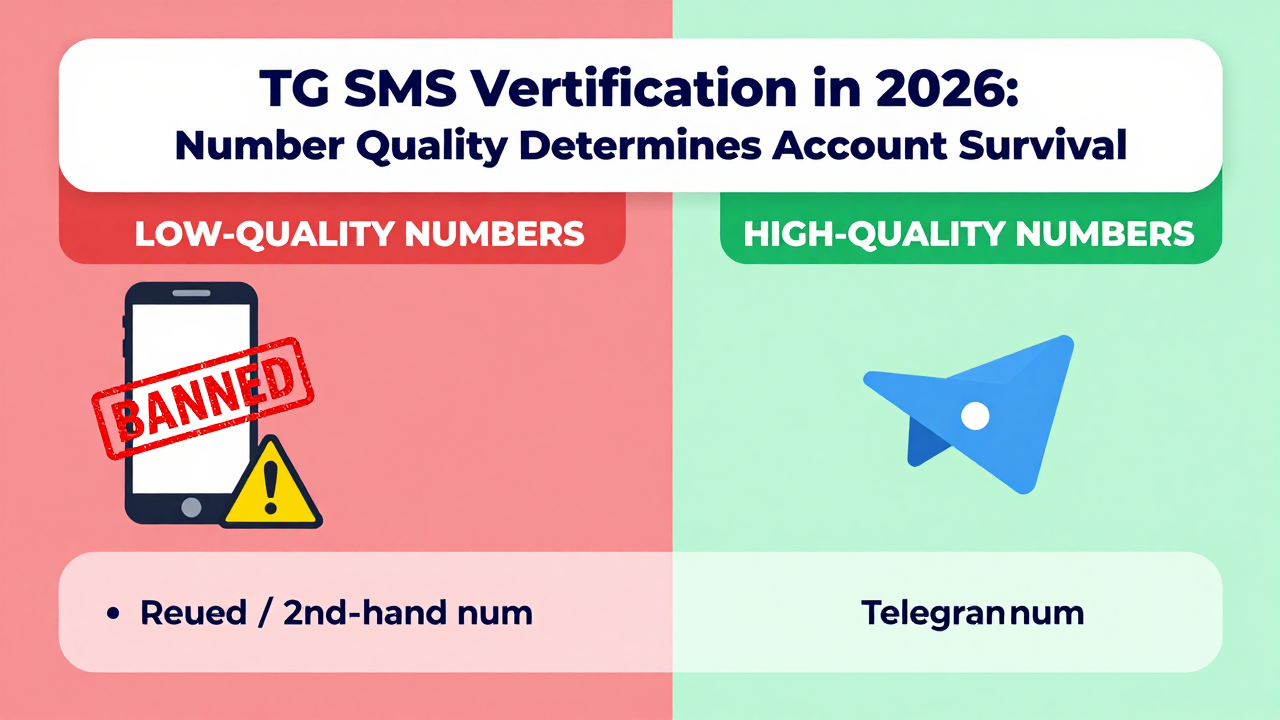
But the supply side is chaos. A large number of platforms are reselling second-hand or even third-hand number resources. A single number may have been used to register dozens of different platforms by dozens of different people. Under Telegram's 2026 risk controls, those numbers are essentially walking red flags.
Cross-border operators consistently report the same problems with low-quality numbers:
- High probability of forced re-verification within the first week
- Accounts stuck in observation mode, unable to join groups or send messages
- Warm-up periods stretched indefinitely, completely derailing your operational timeline
I know an e-commerce team that tried to save money with budget verification codes. They registered 200 accounts and lost over 140 to bans within a month. It's a textbook case: the money saved on codes was nowhere near the cost of lost accounts and wasted labor.
The Real Logic Behind TG SMS Verification: Number Quality Determines Account Weight
Telegram's 2026 risk control is no longer a simple "correct code equals approval" system. It evaluates the number's historical usage patterns, registration behavior, and the environment where the account operates afterward. Think of it like a credit card application: your credit report alone isn't enough—they also look at spending habits and repayment behavior.
Industry consensus is that a high-quality TG SMS verification service should have these characteristics:
- Clear number sourcing, ideally direct partnerships with carriers
- Strict limits on how often a single number can be used, preventing "shared number" flags
- Selectable geographic regions to match your target market
- After-sales protection, such as refunds for failed registrations or compensation for bans
Platforms like Getfollow have built a solid reputation in this space by following exactly this playbook. They work with legitimate number resources and enforce strict caps on registration counts per number, which reduces cross-account association risks at the source.
A word of caution: don't shop by price alone. In 2026, TG SMS verification pricing varies wildly—from fractions of a cent to several dollars per code. But the cost of going cheap is often a cliff-like drop in account survival rates. When you do the math, the more expensive option is usually the one that saves you money.
Hard-Learned Lessons: Details Nobody Tells You About
Let me share a mistake I made personally. Early last year, I was helping a client launch a Telegram community from scratch. I used a platform's bulk registration feature for the first 100 accounts—everything went smoothly. From account 101 onward, registration success rates plummeted, and nearly every account that did register was restricted from joining groups.
After digging into it, the problem was registration frequency. That platform's number pool was being hammered by multiple teams simultaneously, tripping Telegram's risk thresholds. The lesson: a provider's concurrency control matters more than how many numbers they have.
Another detail that's easy to overlook is your IP environment. TG SMS verification is only one piece of the registration puzzle. If your registering IP is dirty, even the best number won't save you. In 2026, Telegram's risk control demands a tight match between IP and number region. I recommend using residential IPs that match the number's geographic origin—it noticeably boosts your account's initial standing.
One more thing operators swear by: don't rush into actions after verification. Let the account sit idle for 24 to 48 hours, mimicking real user behavior, before you start any operations. It's a simple step, but it meaningfully reduces the odds of getting flagged.
How to Choose a Reliable TG SMS Verification Provider
For those making decisions right now, here are the criteria I'd evaluate in 2026:
First, number sourcing. Legitimate providers can tell you exactly which carrier and region their numbers come from, and let you choose. If a service is fully automated with no region selection, skip it.
Second, after-sales policies. Do they refund failed registrations? Do they compensate for bans? Get these terms in writing before you commit. Too many providers sell codes and disappear when problems arise—that's an unacceptable risk model.
Third, risk control capability. Does the provider enforce strict usage limits per number? Do they have multi-layer verification mechanisms? These technical details determine your account security. Getfollow, for instance, has solid practices here with clear number reuse limits and risk warning systems.
Fourth, industry reputation. Ask around in cross-border forums and communities. Don't rely on website marketing—real user experiences are the only evidence that matters.
Here's my safest recommendation: regardless of which provider you're considering, run a small test before committing. Buy a few dozen codes, test registration success rates, account survival, and warm-up difficulty. Once the data checks out, scale up. It's a conservative approach, but in Telegram's 2026 ecosystem, it's the most responsible one.
TG SMS verification might seem like a minor detail. But in the cross-border business chain, it determines whether your account matrix has a solid foundation. Invest the time to understand this piece, and everything downstream gets smoother. I hope this guide helps you avoid the traps and build something durable in 2026.
Frequently Asked Questions
Why do my Telegram accounts keep getting banned after SMS verification?
Most bans trace back to low-quality numbers that have been reused across many platforms. Telegram's 2026 risk system flags these numbers quickly. Using a provider with strict number reuse limits and clean sourcing dramatically reduces ban rates.
How much should I pay for TG SMS verification codes?
Pricing ranges from a few cents to several dollars per code. The cheapest options usually carry the highest ban risk. A reliable service with clean numbers and after-sales support typically costs more upfront but saves you money in the long run through higher account survival rates.
Can I use any IP address when registering with a TG SMS code?
No. Telegram's risk control checks whether your IP matches the number's geographic region. Using a residential IP that matches the number's origin significantly improves your account's initial standing and reduces the chance of restrictions.
What should I do right after registering a Telegram account with SMS verification?
Let the account sit idle for 24 to 48 hours before taking any actions. This mimics natural user behavior and lowers the risk of being flagged. After that, gradually introduce operations rather than jumping in aggressively.