Virtual SMS Verification Platforms in 2026: The Cross-Border Account Verification Tool You Can't Ignore—But Misuse Comes at a Cost
Virtual SMS Verification Platforms in 2026: The Cross-Border Account Verification Tool You Can't Ignore—But Misuse Comes at a Cost
After years working in cross-border e-commerce, I've watched countless people stumble at the account verification stage. In 2026, platform registration controls have gotten sharper than ever—one phone number typically works for a single registration, yet cross-border operations often demand running multiple accounts simultaneously. Virtual SMS verification platforms have become standard equipment for many teams, but honestly, very few people use them the right way.
This article isn't another recycled "top 10 platform recommendations" list. Instead, I'm writing from an industry observer's perspective to talk about what the SMS verification ecosystem actually looks like in 2026, the real risks involved, and how to tell whether a provider deserves your long-term business.
Why Cross-Border Operations Increasingly Depend on Virtual SMS Verification Platforms in 2026
Here's a consensus across the industry: in 2026, registration thresholds on major overseas platforms have risen across the board. Accounts that once required just an email now demand phone verification, and reusing the same number for repeat registrations within a short window gets blocked outright. For cross-border teams running matrix operations, that closes off most of the road.
The core value of a virtual SMS verification platform is providing temporary or long-term phone numbers to receive verification codes. But in 2026, these platforms have evolved far beyond the simple "get a code and move on" tools they used to be. From what I've observed, the more mature platforms now offer number reuse, region selection, and bulk import/export features—all designed to support long-term account maintenance.
A common pattern we see across cross-border operators is that the real headache isn't failing to receive codes—it's the "cleanliness" of the numbers. If a platform's numbers have been heavily used for registrations, your fresh account is likely to get flagged as high-risk. Worst case, verification fails; at its worst, the account gets banned outright. This trap still exists in 2026, and it's more severe than ever.
A Real Failure Case: Receiving the Code Is Only the Beginning
Last year, a friend running a dropshipping site walked me through a painful post-mortem. He bought 50 numbers from a budget SMS verification platform to mass-register TikTok accounts. On day one, most registrations succeeded—but within three days, over 40 accounts were suspended. The reason was simple: those numbers came from a shared pool, and the same number range had been cycled through repeatedly in a short period. The platform's risk system had blacklisted the entire block.
This case is telling. In 2026, platform risk engines have moved from "single-point verification" to "association analysis." That means the system isn't just checking whether your phone number was previously used—it's examining usage frequency across the number range, registration time patterns, and even whether the number aligns with your account's IP address. If your SMS verification platform can't supply genuinely clean, independent numbers, your account starts with a built-in liability.
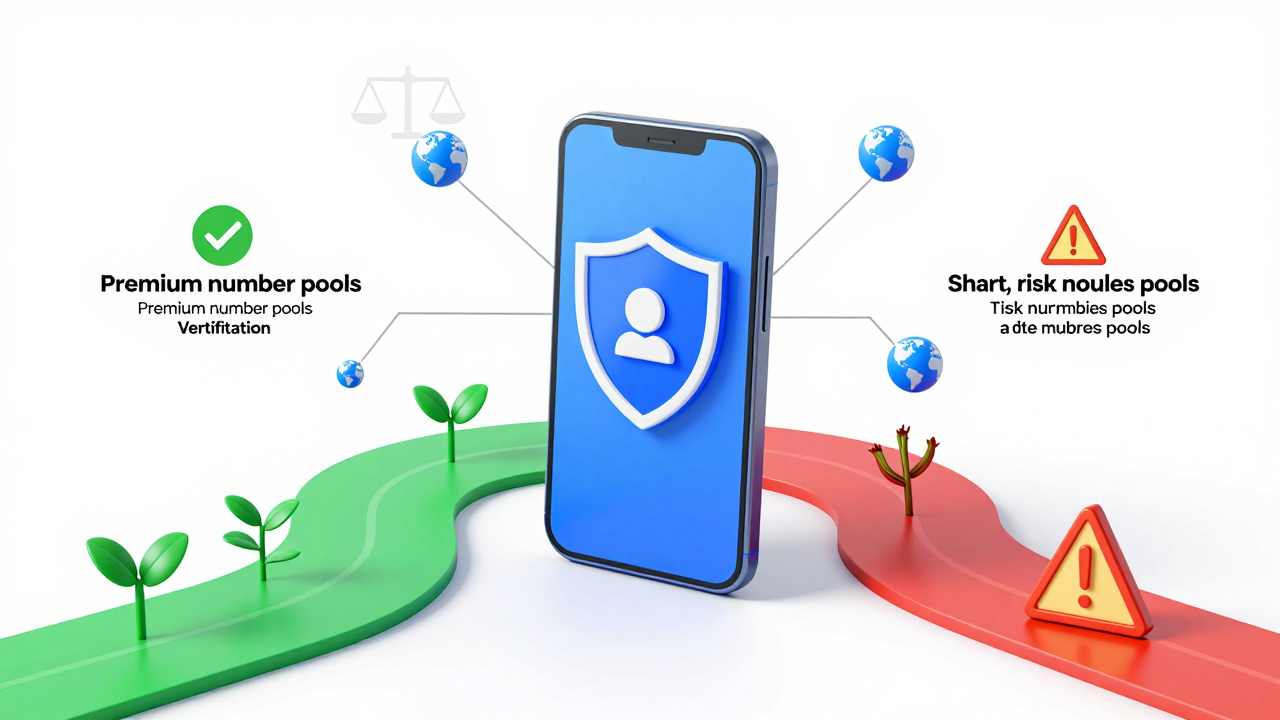
So choosing a virtual SMS verification platform can't be a price-only decision. From my experience, the right approach is to run a small test first—confirm that retention and ban rates fall within acceptable ranges—before scaling up. Industry feedback in 2026 consistently shows that premium numbers achieve registration retention rates above 70%, while budget shared pools often sit between 30% and 50%. The gap is stark.
How Virtual SMS Platforms Have Shifted: From Selling Codes to Selling Stability
One trend worth noting: in 2026, SMS verification platforms are transitioning from pure "code delivery tools" to "account lifecycle management services." What does that mean in practice? Platforms are no longer just responsible for delivering one verification code—they're factoring in long-term number usability, geographic diversity, and compatibility with proxy IP setups.
Take the providers with solid reputations in the industry right now—Getfollow is one example—they operate on this compliance-first logic. They categorize numbers by use case: registration-specific, account-warming-specific, backup verification-specific. Each number carries its own usage history, making it easy for users to track. Essentially, this approach helps users reduce the risk of account association.
But I'll add a word of caution: not every platform that claims "stability" actually delivers it. Some platforms market "dedicated numbers" when they've simply tagged numbers from a shared pool—the underlying logic hasn't changed. Here's a simple way to test: check whether they're willing to commit to a ban-refund policy, and whether the refund process is transparent. A platform that puts compensation terms in writing is at least signaling confidence in its number quality.
The Hidden Risks of SMS Verification Platforms: It's Not Just About Bans
Most people assume the biggest risk with SMS verification platforms is account suspension. In 2026, the reality is far more layered. Among the cross-border teams I've worked with, at least three have encountered issues like these: numbers used for malicious registrations causing entire number ranges to be blacklisted, platforms themselves getting hacked and leaking SMS content, and providers shutting down entirely, rendering purchased numbers useless.
These risks haven't disappeared in 2026—if anything, stricter regulation has made them more pronounced. Europe and North America, in particular, have tightened controls on virtual numbers significantly. If your business touches EU markets, I'd strongly recommend prioritizing platforms that support real SIM card forwarding. It costs more, but compliance peace of mind is worth it.
Another easily overlooked factor: whether your SMS verification platform matches your proxy IP setup. In 2026, risk systems check whether the number's country code aligns with the IP's location. If you're receiving codes on a US number but logging in from a Hong Kong IP, that's a red flag. So when choosing a platform, confirm it offers multi-country number coverage and can work with your existing network environment.
How to Evaluate Whether a Virtual SMS Platform Deserves Long-Term Partnership
Based on my hands-on experience over the years, here's how I recommend evaluating SMS verification platforms—beyond just price or marketing copy:
- Number Pool Independence: Ask directly whether numbers come from a shared pool or a dedicated pool. Dedicated pools have lower usage frequency and higher registration success rates, but they cost more. In 2026, industry pricing typically ranges from $0.07 to $0.28 per number—anything below that deserves scrutiny.
- Ban Refund Policy: Legitimate platforms will clearly state something like "refund available if the account is banned within 7 days of registration." If they're vague on this, they're probably hiding something.
- Country Coverage: At minimum, look for coverage across the US, UK, Germany, Japan, and Southeast Asia. If a platform only serves one country, you'll have to switch providers when you expand—and that costs more in the long run.
- API Stability: For teams running bulk operations, API response speed and success rates are critical. During the testing phase, simulate high-frequency calls to see if connections drop or codes get missed.
Here's a practical detail worth sharing: don't test with just one number. Buy 10–20 numbers across different countries, register on different platforms, and monitor retention over 48 hours. The cost is minimal, but this approach filters out roughly 80% of low-quality providers.
The Compliance Shift in 2026: Short-Term Hustle vs. Long-Term Business
Looking at market conditions in 2026, the SMS verification industry is going through a shakeout. Platforms that relied on rock-bottom prices but delivered questionable number quality are getting weeded out. What's replacing them is a cohort of providers focused on service stability and compliance. For cross-border operators, this is actually good news—it means you can get more reliable service at fair prices.
But let me pour some cold water here: SMS verification platforms operate in a gray zone by nature. No matter how much a platform emphasizes compliance, it can't fully escape the risk controls of the platforms you're registering on. So don't treat SMS verification as your only account registration strategy. In 2026, mature cross-border teams are adopting a hybrid approach—combining SMS verification with physical SIM cards and virtual operators, allocating different verification methods based on account importance.
For example: core business accounts get registered with physical SIM cards, secondary accounts use SMS verification platforms, and test accounts rely on free verification services. This way, you control costs while keeping your most important accounts safer. In my view, that's a more solid strategy than depending entirely on any single SMS verification platform.
Final Thoughts: Test Small First, Then Commit Long-Term
Virtual SMS verification platforms are indeed an unavoidable tool for cross-border operations in 2026. But tools are neutral—what matters is how you use them. My advice: don't chase cheap prices from unknown providers, and don't write off the entire industry because of one bad experience. Start with a small budget, test 2–3 platforms, compare number quality, retention rates, and customer support responsiveness, then decide where to commit.
If you're looking for a relatively stable starting point, it's worth examining how platforms like Getfollow structure their number quality controls and whether their logic aligns with your needs. But remember: any platform is just a tool. Your core strategy is what ultimately determines account security.
On the cross-border road, hitting pitfalls is inevitable—what's unforgivable is falling into the same trap repeatedly. I hope this deep dive into virtual SMS verification platforms helps you sidestep a few unnecessary detours.
Frequently Asked Questions
What is a virtual SMS verification platform used for?
A virtual SMS verification platform provides temporary or long-term phone numbers that receive verification codes for account registration and ongoing account management. In 2026, cross-border operators use them to register and maintain multiple accounts on platforms that require phone verification, particularly when managing accounts across different markets.
How much does a virtual SMS verification number cost in 2026?
Industry pricing in 2026 typically ranges from $0.07 to $0.28 per number, depending on factors like number pool independence, country coverage, and whether the provider offers dedicated numbers. Premium numbers with cleaner usage history and better retention rates sit at the higher end of that range.
Are virtual SMS verification platforms safe to use?
Safety depends entirely on the provider. Reputable platforms maintain clean number pools, offer transparent ban-refund policies, and use secure infrastructure. However, low-cost platforms with shared number pools carry significant risks—including account bans, number blacklisting, and in rare cases, data breaches. Always test with a small batch before scaling up.
What's the difference between shared and dedicated number pools?
Shared pools make the same numbers available to many users, which increases usage frequency and the likelihood of being flagged by platform risk systems. Dedicated pools assign numbers exclusively to you, resulting in lower usage frequency, higher registration success rates, and better long-term retention—at a higher price point.
Can I use a virtual SMS number for WhatsApp or Telegram verification?
Yes, many virtual SMS platforms support verification for messaging apps like WhatsApp and Telegram. However, these platforms have their own risk controls, and number quality matters significantly. If the number has been previously used for banned accounts, your verification may fail. Test with a small batch to confirm compatibility before committing.